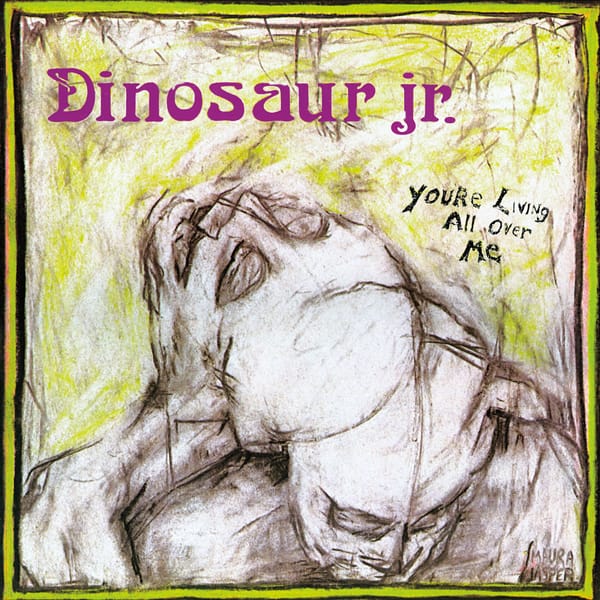
Dinosaur Jr. and the Noise of Melancholy: 40 Years of You’re Living All Over Me

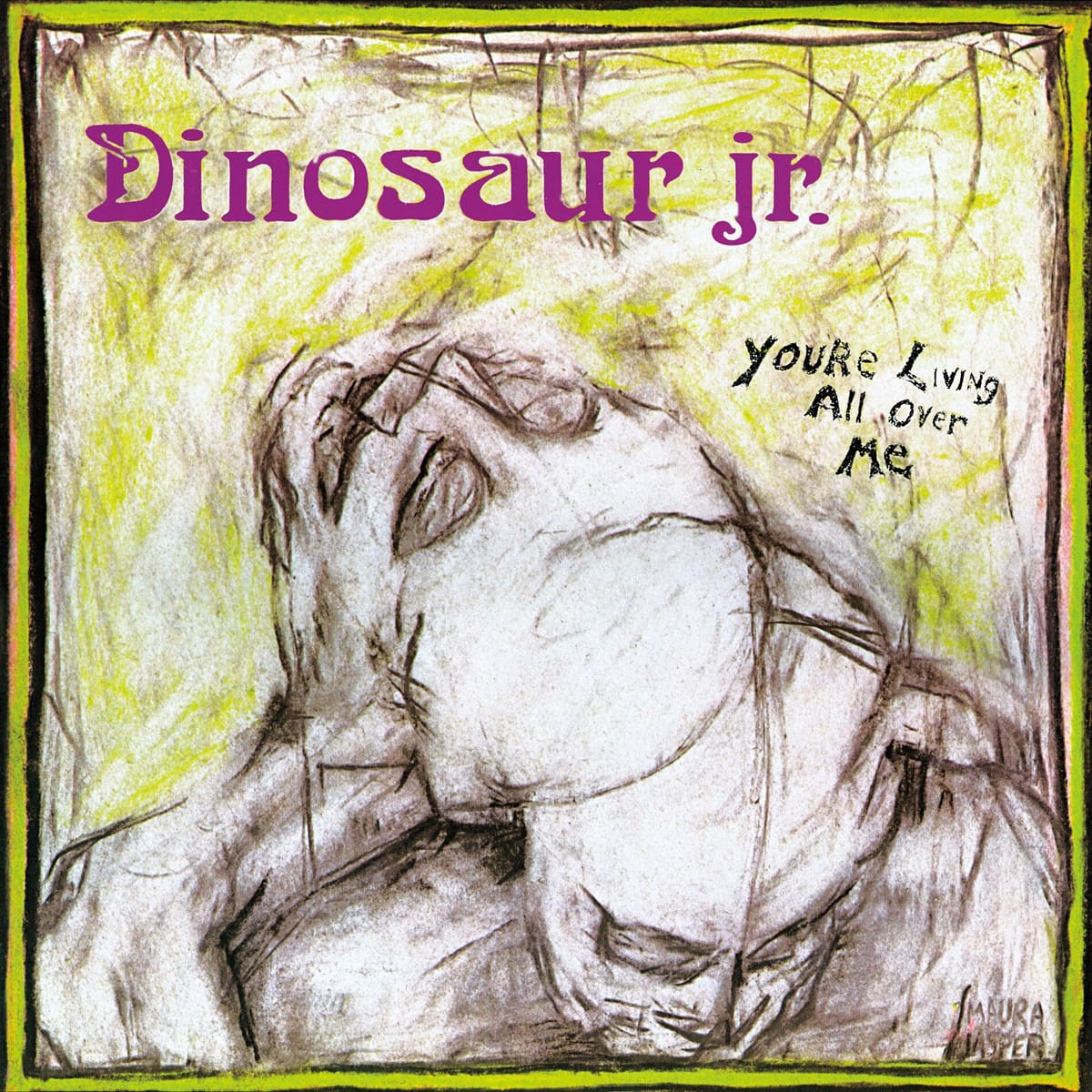
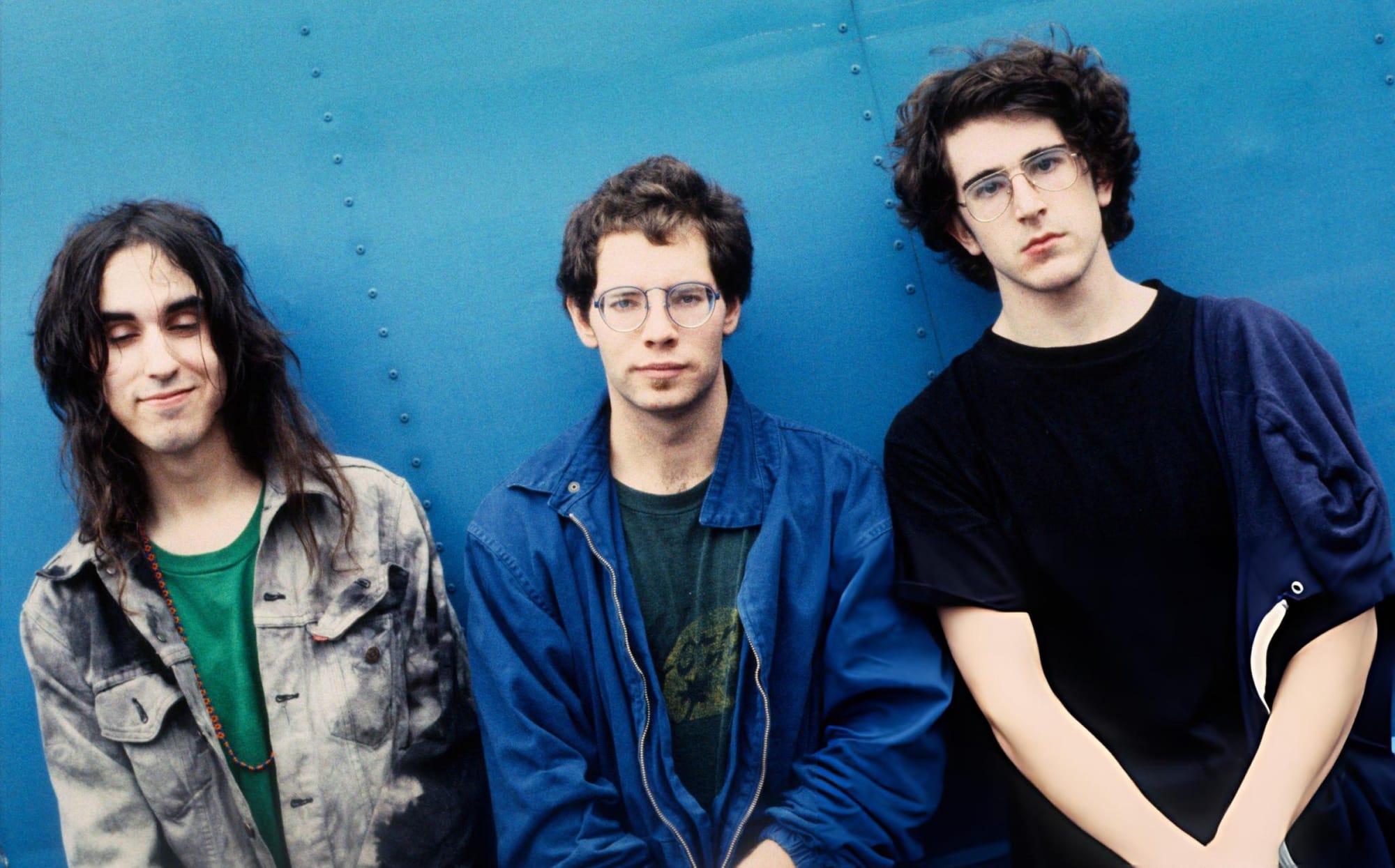
It was 1987 when three kids from Massachusetts, born out of the ashes of hardcore, gave birth to You’re Living All Over Me. In a transitional era, suspended between the apathy of small-town America and the first allure of the big city, Dinosaur Jr. managed to bring together seemingly irreconcilable opposites: the blind fury of punk, '70s-flavored structures, flashes of pop melancholy, and a wall of guitar noise destined to change the course of global alt-rock forever. 40 years after the recording sessions of that historic album, we are joined by Nick Attfield, Associate Professor at the University of Birmingham and author of the book dedicated to the album for the acclaimed33 1/3 series. In this interview, we retrace the genesis of J Mascis, Lou Barlow, and Murph's masterpiece, exploring the legacy of a record that, long before Nirvana's explosion, redefined the boundary between the underground and the mainstream.
Forty years after the recording sessions for that album began, how do you think You’re Living All Over Me fits into the genealogy of the American underground of the 1980s? Would you consider it more a product of post-punk hardcore, or rather a moment of refoundation for alternative rock?
It is certainly tempting to hear You’re Living All Over Me, alongside the first Dinosaur record, as the result of a deliberate step beyond hardcore. After all, J Mascis and Lou Barlow had been half of a hardcore band (Deep Wound), and perhaps at that moment in the early 1980s, they felt a particular disaffection with that style, either for personal reasons or political ones. Michael Azerrad alludes to the former when he quotes Lou’s 1991 Sebadoh lyric (‘Started smoking pot/I thought things sounded better slow’), while it has become something like conventional wisdom that alternative rock grew out of a kind of head-in-hands disillusion with the Reagan era. Hardcore didn’t mean anything anymore, so total withdrawal was the only way forward. I see it slightly differently, however. I wonder if we shouldn’t take Deep Wound too seriously as precursor, particularly not in such a linear way. Actually it was a temporary distraction – an exuberant, furious, and (if we’re honest) not particularly good one compared to other hardcore bands – that risks concealing the much deeper investment that the members of what would become Dinosaur had already made in discovering the pop, rock and metal of the past three decades, both ‘mainstream’ and ‘alternative’, and which, crucially, had begun to reappear in the present as structural changes took root in the US industry and big record labels consolidated by buying up smaller ones. Dinosaur jr is, to me, the result of that investment. For all that they have become a touchstone of ‘alternative’ rock, the first three Dinosaur records are actually quite a conservative rock music grounded in the big 1970s: music for people who like chords and effects and layers and solos, and the occasional Sabbath-like labyrinthine song structure. What politics is there in it? That said, they had lived through and adopted hardcore, and its musical traces (if not its political ones) can sometimes be heard on these early records, as one of the mess of rock styles they had to choose from. That presence is also part of what qualifies this as a new and compelling ‘alternative’ rock. Perhaps there are occasional flashes of furious violence across the lyrics, but more often it is a case of musical outbursts that can’t be suppressed: the end of Sludgefeast, for example, or better, the ferocious eruption at the end of Does It Float? on Dinosaur. This is otherwise mostly a jangle-pop song that sounds like the sixties gone bad. But suddenly it turns so fast and hard that it breaks down, seeming almost like a parody of the hardcore style that it briefly adopts.
In what way did the sonic and visual aesthetic developed by J Mascis represent a break from the grammar of American hardcore at the time?
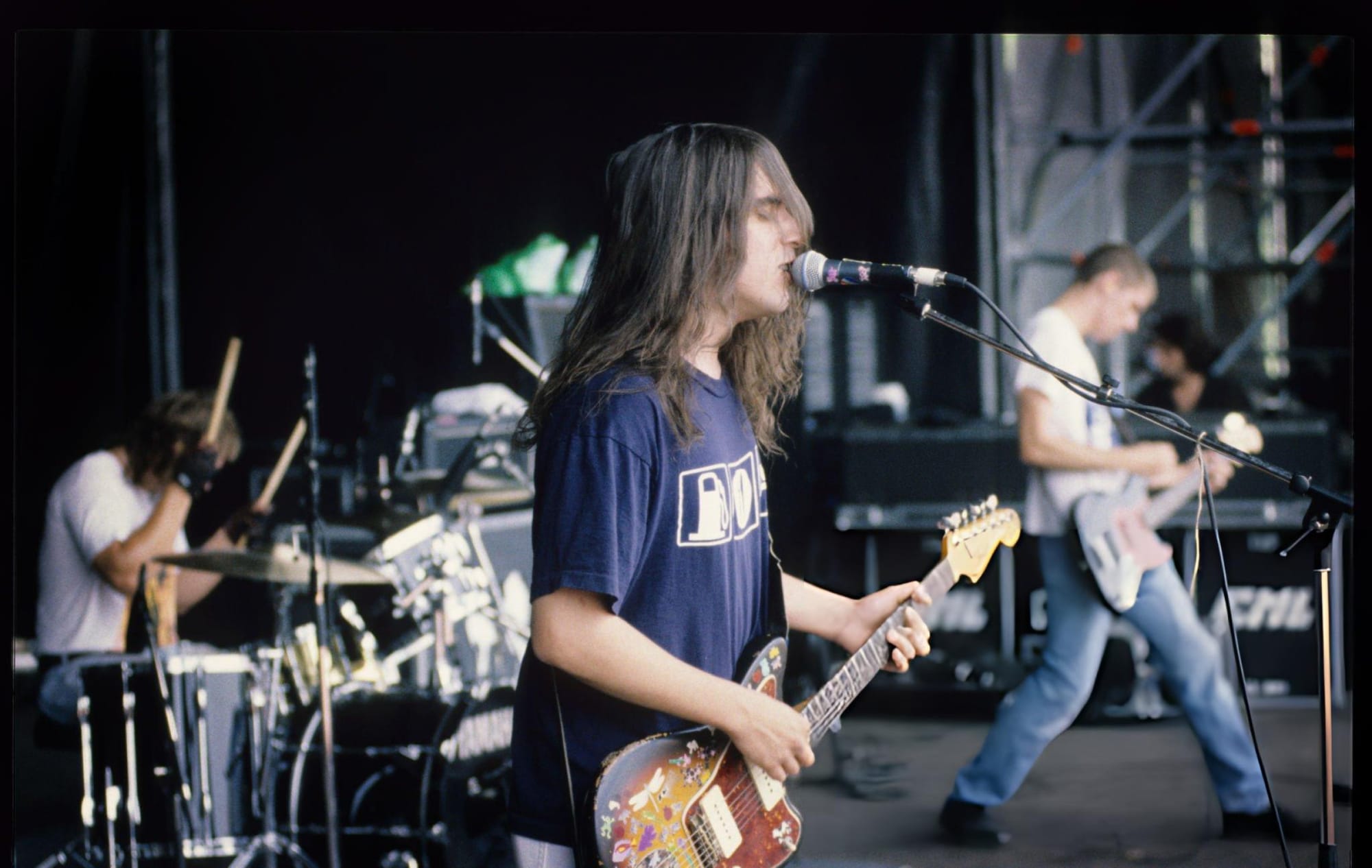
I think the best answer to this question is three words: Little Fury Things. This is the first track on You’re Living All Over Me and its only single. Talking of hardcore influences, or perhaps metal ones, the song’s intro is heavily distorted and powerfully intense, punctuated by J’s frenetic wah-wah rhythm and a series of questions screamed by Lou. While those questions (‘What is it? etc.) are open, the musical structure is the opposite: totally rigid and goal-directed, really just an alternation between two chords. The surprise is what emerges from all this intensity: something completely unlike the intro, actually a little slice of pop melancholy, perhaps about a rabbit, that would sound good on an acoustic, stamped by the entrance of J’s distinctive drawl and all the notes he adds to his jangling guitar chords. Ok – so this is the album of the ‘unrelated intro’ (most of J’s songs have this characteristic). But this song in particular performs a literal break in the grammar between its intro and the song proper, and to me that is the weird alchemy that J and Dinosaur jr had at their fingertips at this particular moment in 1987, with all their rock influences swirling around them. Little Fury Things shouldn’t work as a song grammar. But somehow it does, and if you look at, for example, the YouTube comments on the music video for this song, you will see that these first thirty seconds – the intro to the song and the transition into its first chorus – are exactly what glue people to this music, and what they find electrifying about it as a ‘new’ kind of rock. As for the music video, I don’t know much about it, or whether it was made specifically as promotional material for MTV or another broadcaster (though I know it has often been shown on the former). A lot of it is what would become, and probably already was, predictable ‘indie’ stuff: low-budget DIY/art house atmosphere, rapid found-footage montage effects, shots of the local area with friends as cast, ‘symbolic’ crosses scribbled directly on to the film, frenzied images of the band playing etc. In this sense it would be easy to see it as a chaotic visual mash-up that aligns directly with the distress of the song’s opening screamed section. But note that the video does have more coherent gestures too, and these break with the surrounding visuals. As the pop verse begins, and J’s solo voice comes through most strongly, the shot switches to find him sat, head down, in the bathroom on a (closed) toilet, while a succubus-like figure – presumably another friend of the band’s – dances around him mockingly and fires scribbled white lines at him. Again, a private, stupefying melancholy seems to be part of the expressive point.
Does it still make sense today to regard this record as a kind of anticipation of the alternative rock of the early 1990s (from Nirvana to Pavement)? In what ways did Dinosaur Jr. manage to prefigure the message of those artists? Was their achievement simply to prepare the ground for the commercial success of grunge bands?
I think it does make sense to see You’re Living All Over Me in this way, not least because of the number of anecdotes there are of alternative rock bands listening to Dinosaur and this record in their tour vans. We have to be careful, however, with the details. The link to Nirvana, for example, makes a lot of sense to me for all kinds of reasons. Through the machinations of labels like Sub Pop, there was a clear intermingling of northwestern and northeastern rock bands, to the extent that (apparently) J was at one point only an affirmative word away from being a member of Nirvana. There are, too, shared tendencies across J’s and Cobain’s lyrics (infantilization, captivity, surveillance, small-town despair) and a love of poking fun at the conventional heavy rock fan. Perhaps you could even hear J’s beloved clean-distorted shifts as prefiguring the famous Nirvana soft-loud song structure. Then again, there are big differences. I don’t think J is nearly so interested in monotonous metal harmony as the young Cobain was (maybe that is the specific northwestern influence of the Melvins). And Dinosaur jr were never anywhere near so reckless in their personal or professional lives, as far as I know: the idea of them carrying out Nirvana’s staged destruction of instruments at the end of a show, for example, seems crazy, against all principles of ownership and conservation and music-technical skill. Why would you smash up your identity and, for that matter, your livelihood? On Pavement, I might as well say that – though they undoubtedly classify as an American ‘alternative rock’ band of the early 1990s and so seem to fit the same narrative – only rarely can I see the connection in music and attitude. To begin a record, immediately after the summer of Vanilla Ice, with the words ‘Ice Baby’ seems to me to signal a self-aware poetic pretentiousness that draws more on the Fall than on Dinosaur jr or, really, any of the guttural Seattle bands. Also, that particular Pavement song (Summer Babe) doesn’t drive anywhere: if it has aggression, it is all parody, falling back instead to an impertinent hi-hat tapping at the end of every other measure. Again, it seems to emphasise a clever, personal self-consciousness that is exactly what those early Dinosaur rock-outs want to escape, and exactly what other ‘heavy’ bands have usually valued them for.
Several commentators have described Dinosaur Jr. as among the inventors of “slacker rock” (a distinction they share with Hüsker Dü), to the point that Sonic Youth seemingly dedicated a line to them in the song Teen Age Riot. Yet the concept of “slackery” appears frequently in that period (Richard Linklater even devoted a film to it, Slacker). How should we therefore contextualize the revolution brought about by Dinosaur Jr. in relation to the American social context of the time?
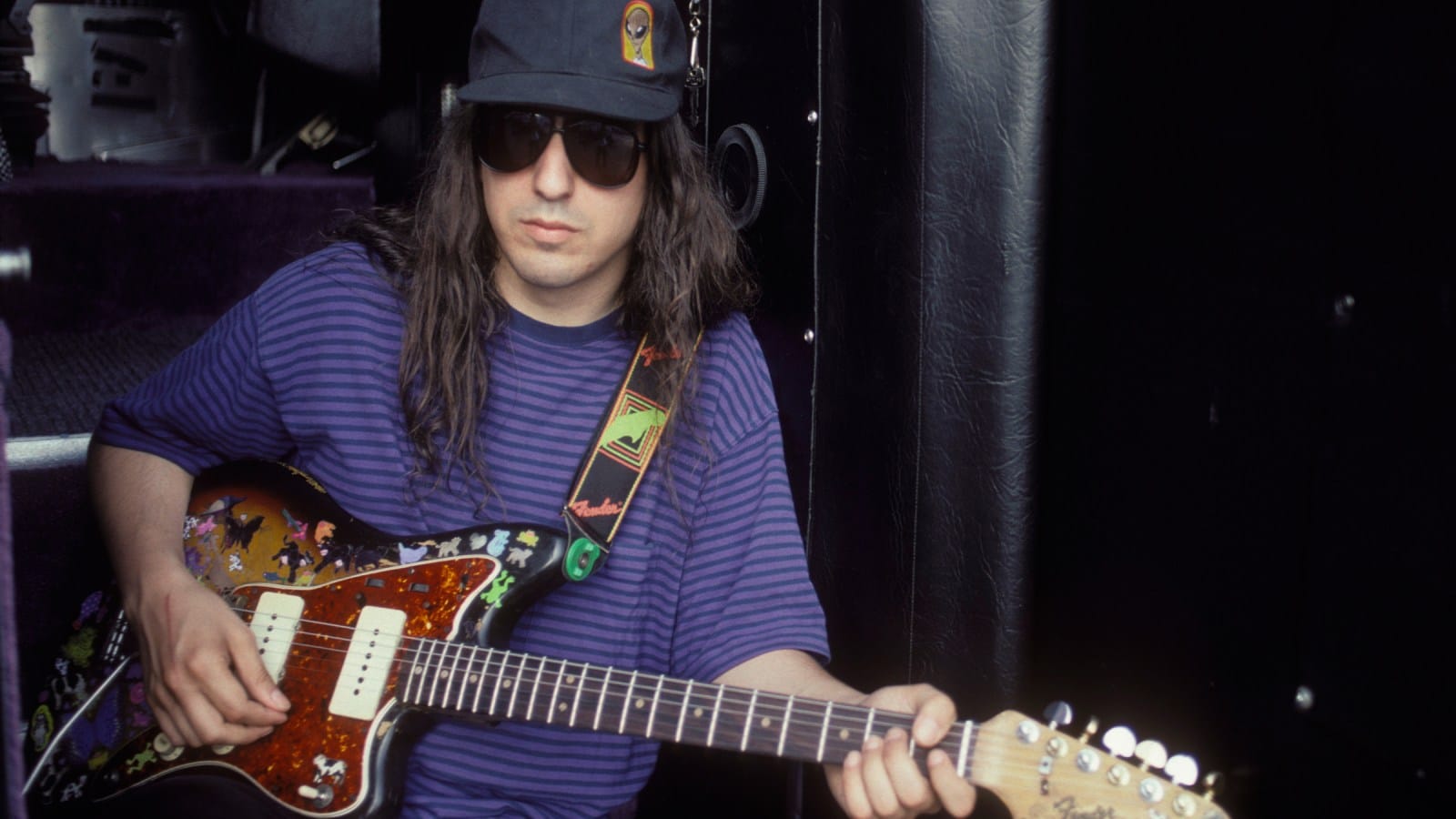
I suppose J is one of rock’s most famous ‘slackers’. There are all kinds of amusing anecdotes that celebrate that: I remember one in which the interviewer observed him laying on a couch, pizza box precariously balanced on his chest so as to minimize the distance between slice and mouth. Of course, his singing voice – part-drawl, part-whine – only reinforces this impression. I wouldn’t want to call this a one-man revolution, though, or anything in that sort of Sonic Youth mould. As the question implies, it is more of an ingrained cultural phenomenon of the late 80s/early 90s that J cultivated a particularly notable version of. Others did it too, and so I think it’s important to distinguish between rock’s slacker personas. Cobain’s slacker drawl – to go back to a previous example – is depressive, words and phrases leaking from one into another (‘hello/how low’, ‘blue/blew’) because communication has become impossible and none of it matters anyway. J’s slacker, on the other hand, has a genius for the indirect statement. ‘Didn’t say it’s not ok’, he sings in the first verse of 1993’s Start Choppin’. It takes a moment to work out what this means; combined with the creaky vocal delivery, it ultimately sounds like he just can’t be bothered to give anyone a straight answer, particularly not when his feelings are involved. But still he wants to say something direct, and that’s what the instruments deliver. Music, I think, especially in these rock styles, isn’t very good at being slack: the riff of Start Choppin’ is about as funky as you will get in the rock of the early nineties, and remember the intensity of the first thirty seconds of You’re Living All Over Me and the many similar eruptions across the record. Also I recall Murph, the drummer, talking about the stress of recording it (‘…the ultimate test that I had to pass, or I’d get fifty lashes or something’), and that says a lot about the importance of these songs to J and the band, of getting them exactly right. Don’t be entirely fooled or distracted by the rough edges or the ‘slacker’ label: this music is meticulously configured and recorded to tap into all the pleasures of rock listening, and you can hear that in all the pedal effects, the overdubs and layerings, the ‘fake’ intros as they make way for the main songs, and above all, the quiet phases that anticipate J’s monstrous guitar solos.
Many critics have also noted how You’re Living All Over Me anticipates and inspires several sonic solutions that would later become iconic in British shoegaze. Where do you see convergences between the sound and imagery of Dinosaur Jr. and that of bands such as My Bloody Valentine?
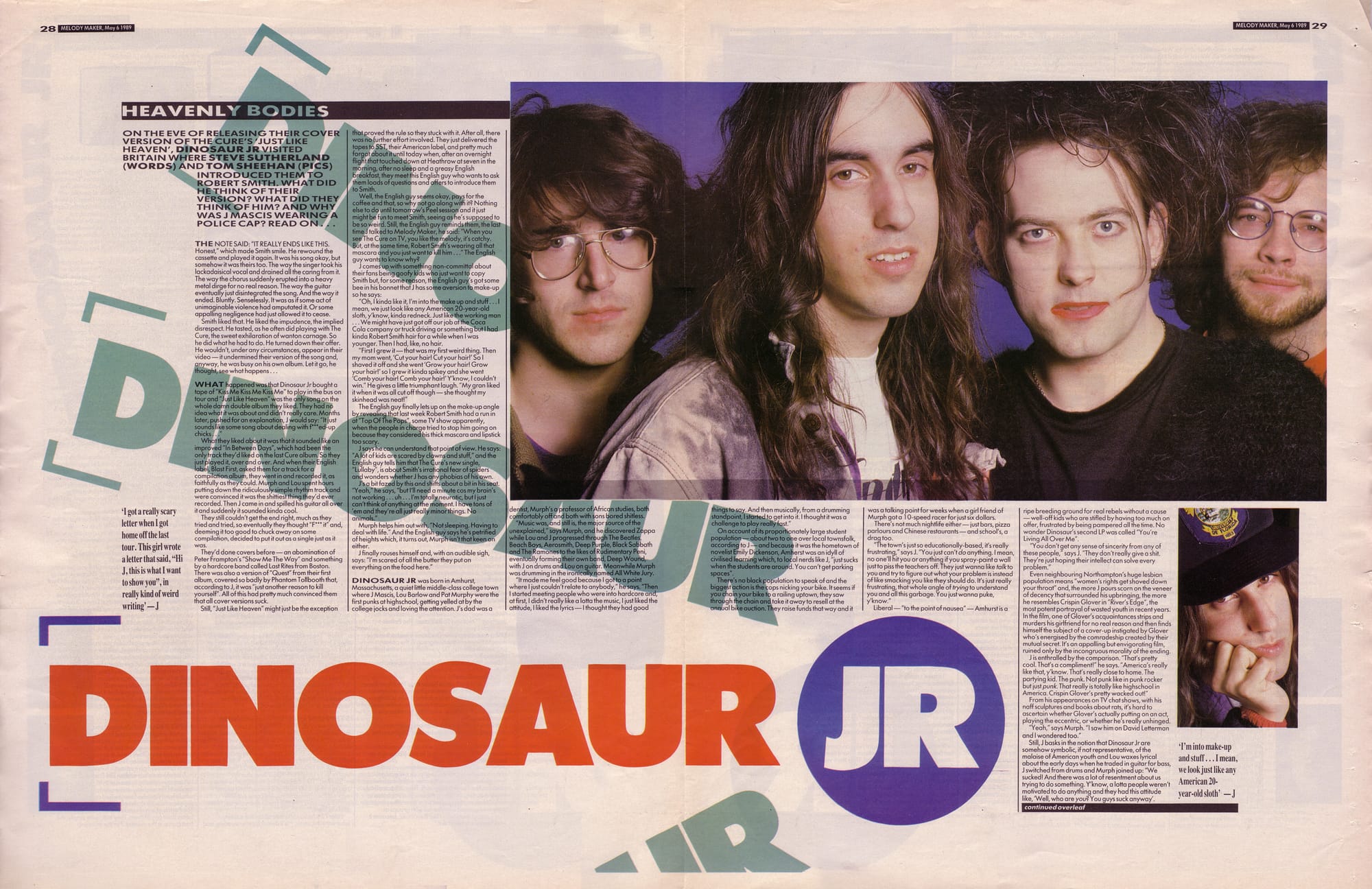
Certainly, from my perspective it would be hard to imagine bands like My Bloody Valentine and other nineties Irish and British shoegazers without Dinosaur jr as an influence somewhere in the background. The differences are obvious – a record like Loveless has a kind of meandering mystical quality that is entirely lacking in Dinosaur’s big rock – but then, so are the similarities in brutal guitar noise against pop melodies, layering of effects, and so on. I do think, though, that we have to be careful about only seeing one-way influence only here, since that would be to indulge the ideology of Sub Pop and the other American indies who, fed up with small British labels wielding so much cultural capital in the 1980s, tried to launch a US counter-invasion in Europe. It would be better, in my view, to accept at least the possibility that the influence was more of a two-way street – a kind of transatlantic exchange in the context of comparable shifts in the recording industry against the backdrop of conservative regimes, Reagan in the US, Thatcher in the UK. It would be interesting to know more, for example, about a label like Blast First, who seem at first to have existed only to release Sonic Youth’s music in the UK and so have become known as an importer of US noise. This is basically correct: see the 1989 compilation The Devil’s Jukebox. But it is easy to overlook that Blast First were also releasing British and European noise bands and alternative/experimental rock more generally at the same time – Head of David, A.C. Temple, Stretchheads, Mekons, Easy, and so on. You’d be hard pressed to find much of this music on streaming platforms now, or really on any format. But it is worth a listen, and a think, if you can: I recall that TAD, one of the quintessential Sub Pop grunge bands, cite Head of David as a band they greatly admired around 1990.
Unlike the explicitly political hardcore of the early 1980s, the songwriting of J Mascis appeared far more introspective and disillusioned. How do you explain this shift from collective anger to private melancholy, also in relation to the socio-political context of the time?
If I’m honest, I just don’t think that politics is J’s thing, at least not when writing songs. The hundreds of songs he has written and released across the past forty years imply that he doesn’t see politics as a good subject for rock music. It isn’t what it is for. And bearing in mind Dinosaur jr’s impressive longevity compared to most long-sunken ‘political’ bands, and the huge and productive success of their post-millennium revival, few would disagree with a perspective like this. Where there is anger, it turns inwards towards private melancholy, even if the contradiction is jarring. That is the basis of this music, in my view.
In your view, what is the most visible legacy of this record in later musical production? In which albums can we still hear the influence of that sound today?
This is a tricky question because, while there have been many things since 1987 that sound in some way like You’re Living All Over Me, it typically isn’t easy to establish direct, non-contrived lines of influence. Music is just too evasive. Critics often point to the British band Yuck (c.2009), to give one example, which makes sense in terms of their walls of noise and fuzzbomb melodies; you would have to say, though, that J and Lou are unlikely to write so pitch-perfect and Fleetwood Mac a song as Georgia. Also recently I have been listening a lot to Rein Sanction, a Florida band (c. 1981-93) now so obscure that no-one can even tell me how their name was pronounced (‘rhine’ or ‘rain’), and whose chance at fame is often said to have blighted by their closeness in sound to Dinosaur jr (even though Rein Sanction were actually formed first). Again, this makes sense in the drawl vocals, the occasionally eccentric song structures and the frequent pedal effects. But the highly mobile bass lines are nothing like Lou Barlow’s, and overall there is somehow a kind of paisley about Rein Sanction that places them closer to bands like Das Damen, and in turn raises the interesting question of why ‘psychedelic’, so apt in these cases, doesn’t usually seem to fit as a label for J’s songwriting and guitar playing. Perhaps the best way to think of influence is in terms of attitude rather than sound: a freewheeling approach to making rock out of a jumble of previous styles, and the ability to swirl it all together. Maybe this was more possible in the mid-1980s than it is today. That said, Dinosaur jr have also had considerable and unusual success in their revival period (now itself extending to about 20 years), which indicates that they can still do it to some degree, and might still serve as a model for others who want to do the same.
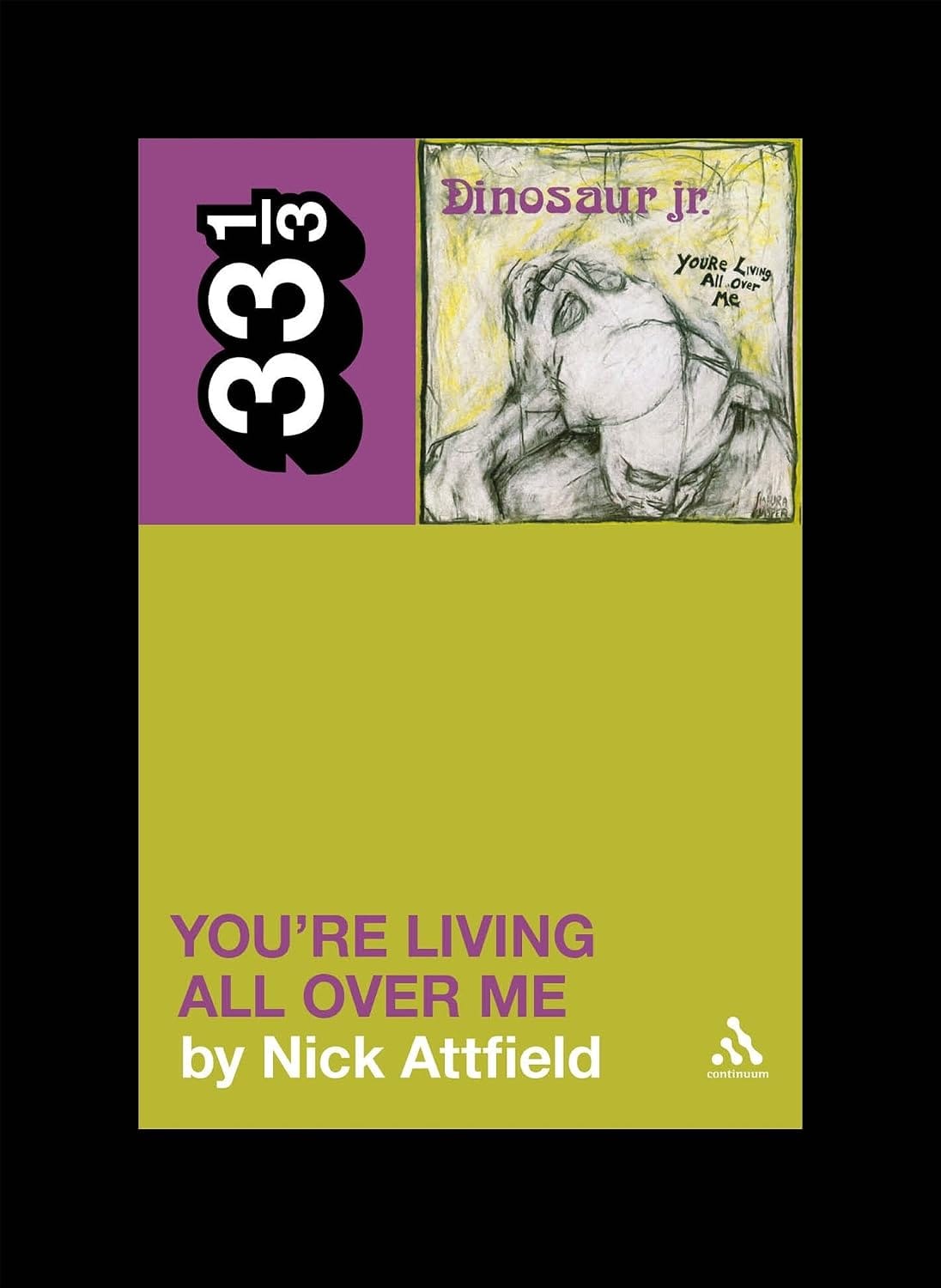
Dinosaur Jr.'s You're Living All Over Me
1985. Dinosaur, still without the Jr. Not hardcore anymore, but not yet anything else either. First live shows: fearsomely loud. First record, a fearsome mess: a raw miscellany thrown together from small-town ennui, the apathy of the middle classes, and all the things teenage boys are obsessed with.
1987. Dinosaur Jr. A new record, You're Living All Over Me, the result of a move into a college dorm, encounters with Sonic Youth in the big city, and a hell of a lot of practice. Searing guitar riffs smash into mountainous solos; gnarly pedal effects light up twisted song structures; tight punk drumfills wade through distorted bass sludge. Contradictions are everywhere, but with opposite poles forced together, a fixating spark is created - one that, pre-Nirvana, ignites the idea of how the alternative might also become the mainstream.
All things, as this book explores through interviews and comment from the band and its friends, that make up the unique - and uniquely odd - story of a record that cares so little it cares a lot.