Counter-History of Italian Stoner

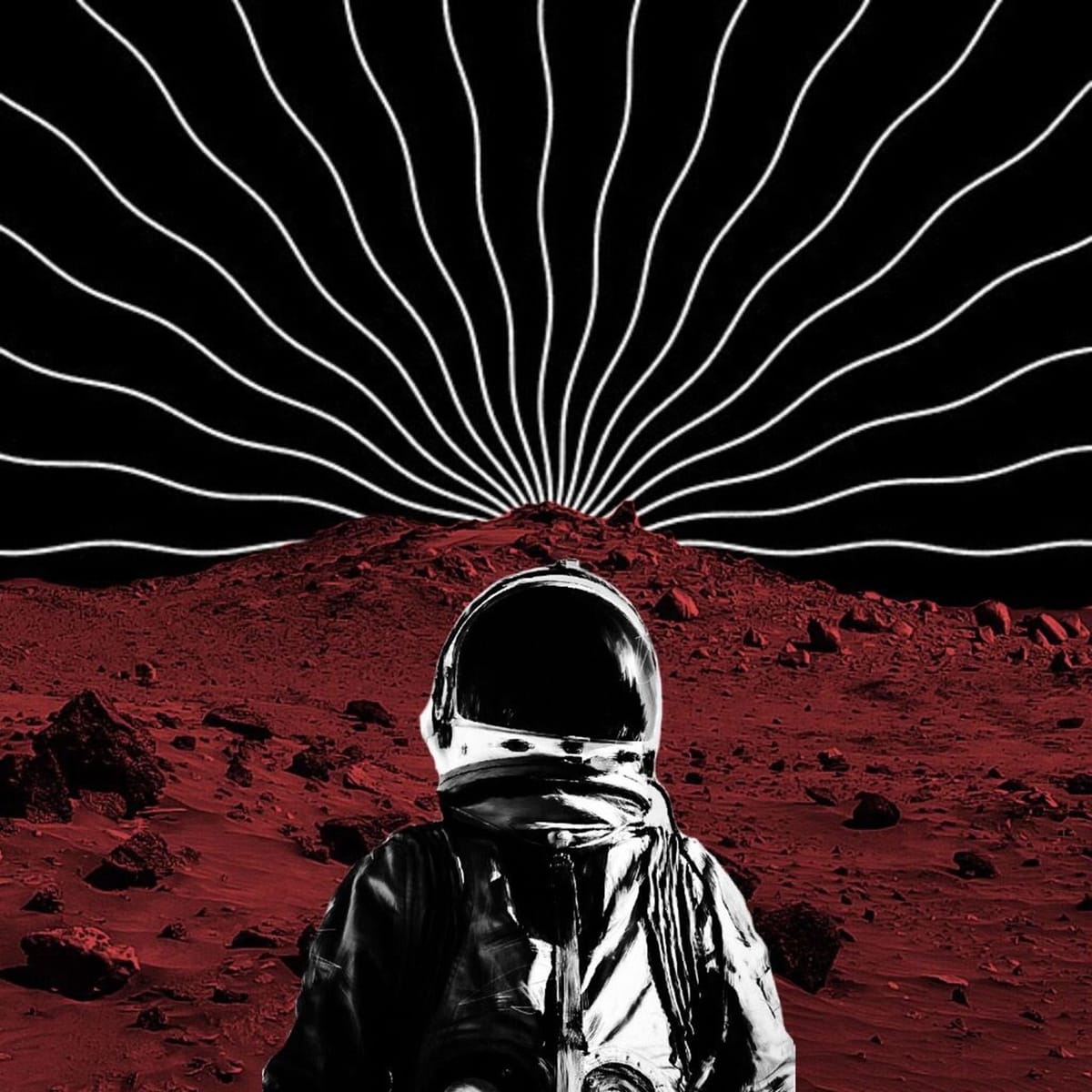
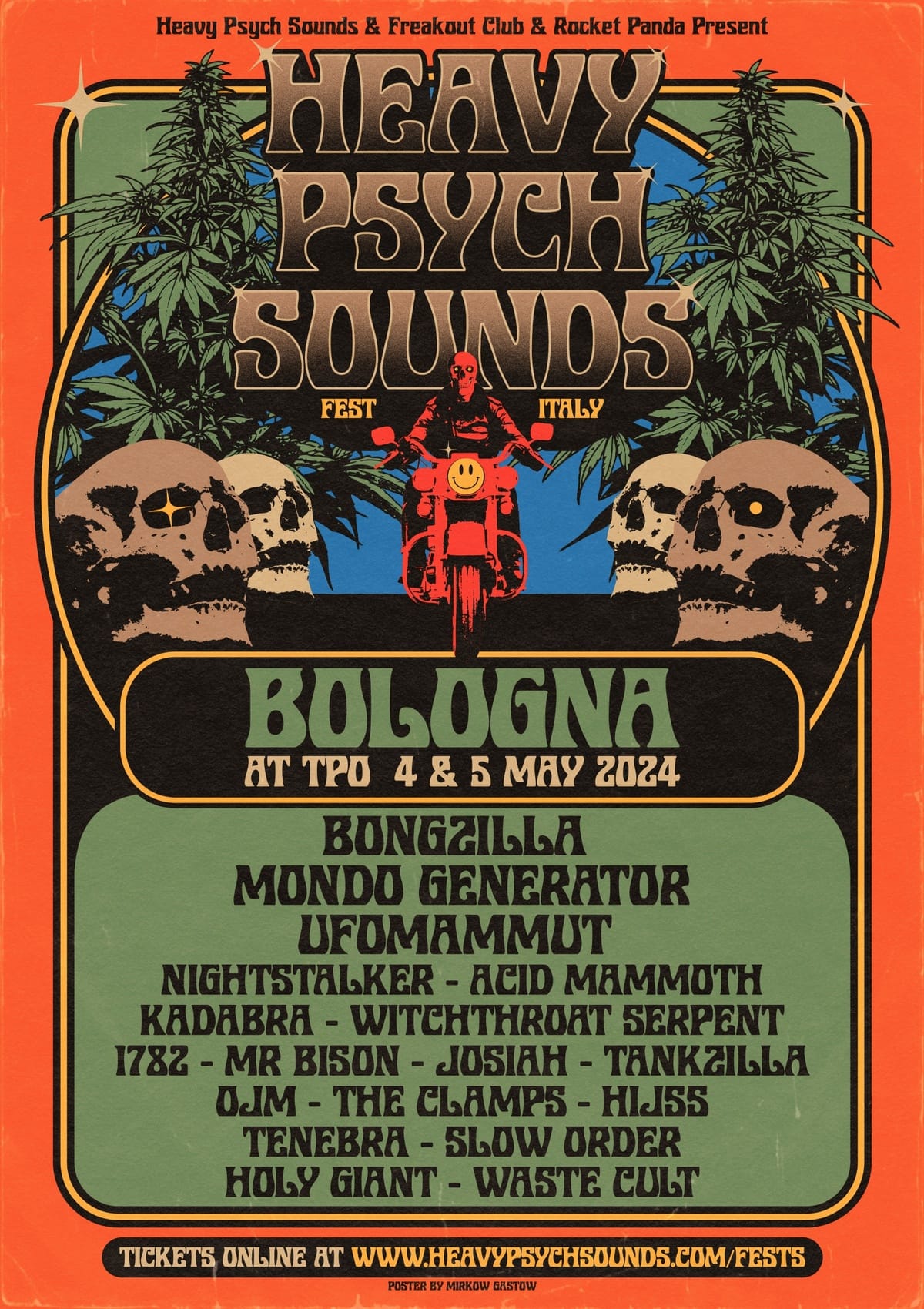
When we started thinking about a sort of revisionist narrative on the fortunes, misfortunes, and vicissitudes of stoner in Italy, we wondered who could represent the most authoritative sources for drafting a historiography. Without much hesitation, we thought of Gabriele Fiori — a name tied on our shores to two true pillars of the musical underground: Black Rainbows on one hand, a pioneer stoner band in Italy for which he is the frontman, and above all the record label Heavy Psych Sounds. Founded by him in 2007, it has become an iconic reference point for everything concerning the European heavy psych, sludge, acid rock, and doom scene. Gabriele kindly granted us a lengthy interview in which we trace two decades of Italian underground history, allowing us to draw a line on the reception and evolution of a genre that has not yet managed to establish itself, at least in Europe, in more mainstream circuits. Below is the interview:
When and how did this genre enter your life?
I was pretty young. In the late '80s, my cousin, who was already listening to White Zombie, Soundgarden, and Danzig, pointed me in that direction. But after listening to the cassette of Blues for the Red Sun (1992), 14-year-old me blew out the stereo speakers. Kyuss was something brand new and never heard before, distinct from grunge and the Nirvana trend—much like Monster Magnet, with their broader, more complex sound Ero piuttosto piccolo, mi indirizzò a fine anni '80 mio cugino che già ascoltava White Zombie, Soundgarden e Danzig.
When did the idea for the record label come about, and what was its mission, at least initially?
It actually came about with my band, Black Rainbows. We released our first album with them through a small French label, but they didn't satisfy us in terms of promotion and distribution. So we decided to branch out on our own and start figuring out the mechanics of promotion (which have changed over the years with social media). We were touring a lot with the band and meeting other groups. That's how the idea was born to offer label services both to smaller acts on the scene and to larger bands for smaller releases (Karma to Burn's EP comes to mind). The label essentially launched in 2007 with a compilation of Italian bands, officially released under Go Down Records, but in reality, it marked our very first release.
Was there a stoner scene in Italy when the label started out?
The Italian stoner scene is one of the longest-running, even though the audience holds it back. German, Dutch, or Belgian crowds go to shows, buy beers, read magazines—this translates into revenue that breathes life into the scene. We prefer going for fried seafood by the sea on Saturdays (lucky us, though...). But Italy has always boasted bands with a different edge. Germany, for instance, didn't have big-name groups at the time, whereas we were pioneers: Ufomammut, Vortice Cremisi, That's All Folks. In short, it was a scene without concert infrastructure, venues, or magazines, but it boasted a few names that were making their presence felt during a historical moment (1996-97) when everything was still coming together.
What were the most significant record releases that shaped the Italian scene and, more specifically, your story as a label?
Getting Brant Bjork was definitely a major catch. We initially released a new album with him alongside reissues of his entire discography, followed by two more unreleased studio albums. I could also mention Nick Oliveri, Yawning Man, Nebula, Bongzilla, and then all the records by Black Rainbows, Witchcraft, and Pentagram. But also smaller bands. The absolute best thing about Heavy Psych Sounds is that over time it earned the badge of working with renowned bands while continuing to dig up new talent and support smaller acts that don't have a large audience yet. The reality is that today getting 'known' is a total crapshoot: on average, bands all play pretty much the same kind of stuff—interesting, but hard to make stand out.
Is there an Italian geography of stoner rock? What are the most fertile hubs in this respect?
It's plain for everyone to see that the scene developed mostly in Northern Italy before spreading somewhat into Central Italy. From Rome on down there is still very little—in fact, hardly anything—due to a lack of clubs and live music. But you can notice this from the routing of any band, from punk to hardcore: nobody goes to the South; venues are rare, and there isn't a scene. That said, I'd like to mention Abruzzo here, with Frantic Fest.
Has there been a generational shift compared to when you started? Who is today's average stoner rock listener?
Rather than a generational shift, the scene has actually blossomed compared to when we began. The early 2000s up until 2007, when Black Rainbows' first album came out, was a dark period: there was no infrastructure for the underground scene, no festivals, social media was limited to early-stage MySpace, and people weren't buying records. I think the 2012–2014 period can be marked as the first real moment of momentum for this scene: many bands formed (Kadavar, Stoned Jesus, Graveyard); the return of vinyl made people go crazy; and new festivals popped up (London and Berlin's Desertfest, along with other smaller gatherings across Europe). The spread of digital media and easier internet access definitely played its part during this period. Furthermore, this scene started taking off thanks to merchandise sales, as it still leans on a particularly eye-catching aesthetic to this day. The legalization of marijuana in America likely contributed as well, giving rise to a more 'occult' phenomenon and bands like Uncle Acid & the Deadbeats, Beastmaker, or Electric Wizard that broadened the audience. That's also because stoner rock has never stood on its own: it has always gone hand in hand with subgenres like doom and psychedelia. The scene hasn't blown up to a mainstream level yet, but compared to twenty years ago, it has grown exponentially.
How would you evaluate the current state of Italian stoner rock compared to the international scene?
It used to be that the vast majority of bands came from the United States, while the Central European underground was practically silent, with a few exceptions from Italy and Holland with Beaver. On the other hand, there was an extraordinary Swedish explosion centered in Gothenburg and Örebro. It was basically the US vs. Sweden back then. Today, things are starting to break out in France, Germany has Kadavar, and Belgium has Amenra. The Italian scene today also boasts some interesting new acts: Messa, Mr. Bison, Tons, and several others. We have nothing to envy compared to other mid-sized scenes—we are a piece of the puzzle, and bands enjoy coming to play here in the few spots available (Milan, Turin, Bologna, and sometimes Rome). But it goes back to our initial point: Italy isn't fundamentally a rock country; we're about il Bel Vivere—the sweet life—a bit like Brazil. But in the end, who cares?