Lowertown - Ugly Duckly Union


 6.5
6.5
There’s one aspect of Gen Z that, as a late-stage millennial, always gets a bit on my nerves. I’m referring to that tendency to identify with entirely nominal “outsiders” — characters with the label “freak” glued next to the “gender” field on their ID card, but who, in daylight, turn out to be the most charming, trendy, and at the same time perfectly normative teens you could imagine. Mind you, the previous generation had its Robert Smiths too — people smearing eyeliner under their eyes and invoking suicide, only to gift the world some of the catchiest pop candy in history — but it also had figures like J Mascis, Elliott Smith, or Daniel Johnston, personalities you’d picture in a social setting with a certain awkwardness. All this preamble is to talk about Lowertown, an Atlanta duo made up of Olivia Osby and Avsha Weinberg, 24-year-old friends since high school who already have three albums under their belt (Friends, 2019; The Gaping Mouth, 2021; I Love to Lie, 2022). At first glance, they look like a glossy hybrid of Timothée Chalamet and Courtney Love, yet they churn out bedroom pop that oozes discomfort from the very first second. They’re one of those projects that climbed the algorithmic ladder thanks to a Gen Z-angst aesthetic — all lo-fi production and diaristic lyrics — perfectly suited to the micro-format of social-media virality and to online niche spaces like Reddit or Tumblr. Having ended their collaboration with the British label Dirty Hit — home to bands like The 1975 and Wolf Alice, and the label that first launched them into the indie scene — the American duo are now releasing their fourth studio chapter through Summer Shade, a subsidiary of the American label Run For Cover Records. According to Lowertown themselves, the split coincided with a particularly difficult period in their lives, prompting them to rewind the tape of their trajectory and return to the “punk” spirit of their beginnings.

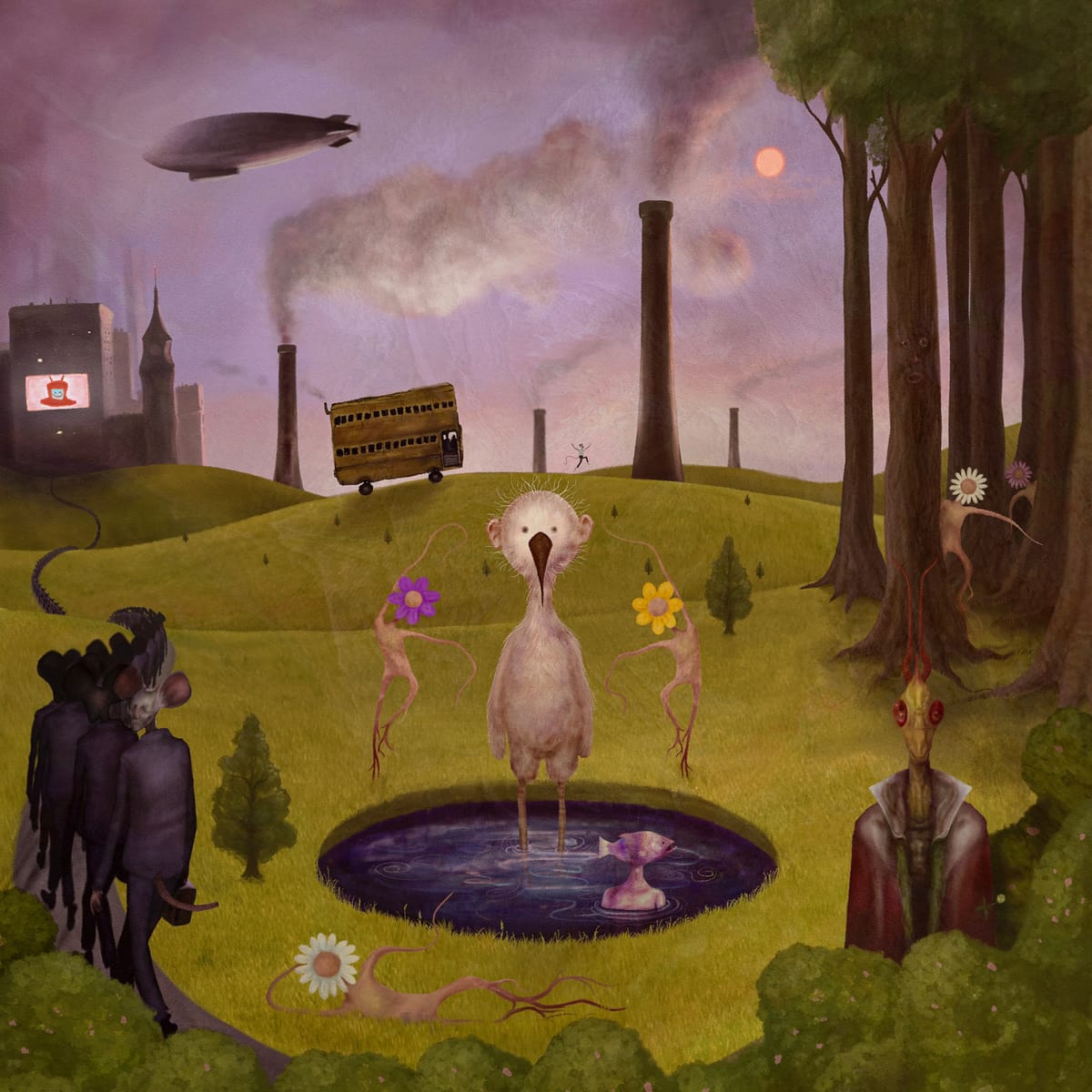
The entirety of Ugly Duckly Union revolves around the theme of identity crisis — the question of “who am I, really?” In the opening track, they ask, “Maybe I’m good, maybe I’m bad”, which sounds a bit like a belated prepubescent reflection coming from a 24-year-old. But the childlike aesthetic is clearly intentional (“Maybe I’m a baby that’s just been born”), as shown by the deliberately juvenile follow-up in the tracklist (“I’m Your Worst Friend”) or the adolescent escapism of Big Thumb (“I don’t know which way to go”). Adolescence here is understood not as an age bracket, but as a metaphor for the “fluidity” of contemporary life. It’s not exactly a groundbreaking idea, but at least it sounds good. The band clearly did their homework, and the record shows how they’ve tamed the more morbid atmospheres of EVOL before reconnecting them — through a process of digging and study — to their own roots in Sunday Morning and to a great deal of contemporary indie folk in the vein of Alex G. The sense of unease seeps through Olivia’s somewhat phlegmatic vocals over the heavenly strumming of Mice Protection and the Kim Gordon-esque Echo of Desire.
The elegiac arpeggios of Forgive Yourself push the duo toward a degrading form of self-flagellation, acknowledging their own toxicity (“Greedy little piggy”). The more laid-back moments, like Cover You, are quickly contradicted by tirades such as Dipsh*t or (I Like To Play With) Mutts, which, while once again drawing from Sonic Youth, at least this time turn their gaze outward, pointing at the rot within the System itself. Every original artistic act requires sacrifice and suffering, as they sing in Anything Good Takes Blood. If, on Lowertown’s fourth record, the latter lies in accepting one’s own imperfections, the former is never truly carried through. Instead, the band gravitates toward a controlled — not to say conformist — musical form that ultimately fails to highlight the authenticity they celebrate, if not outright extinguishing it in homogeneity.