Commercial genius or manipulation? The grunge paradox and 'loser' culture

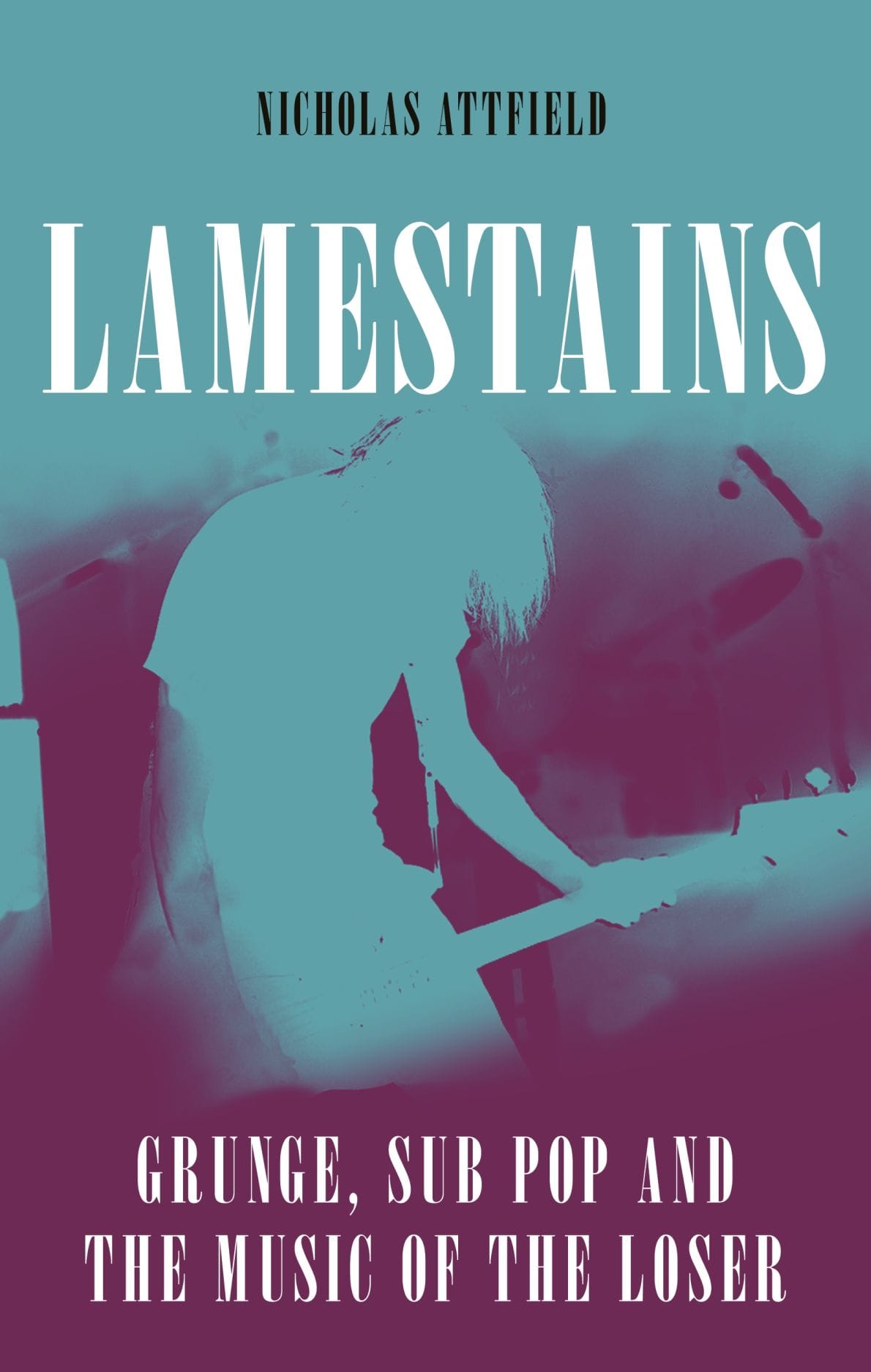
More than 30 years after its explosion, grunge continues to be remembered as the last great watershed movement in modern rock—a golden era in which the underground overwhelmed the mainstream. But what truly remains of that phenomenon beyond nostalgia and mythological veneer? And above all, how much of its aesthetic was genuinely subversive, and how much was instead the result of a brilliant (and contradictory) marketing strategy? These are the questions asked by Nicholas Attfield, Associate Professor of Musicology at the University of Birmingham and author of Lamestains: Grunge, Sub Pop and the Music of the Loser. In his book—acclaimed by critics and music historians such as Everett True—Attfield delivers a critical, impeccably researched history of Sub Pop Records, the legendary Seattle independent label that launched bands like Nirvana, Mudhoney, and TAD. In this interview, the author walks us through the origins of that era, dismantling common clichés about the genre and explaining how Sub Pop managed to transform a sense of inadequacy and underground culture into a global phenomenon.
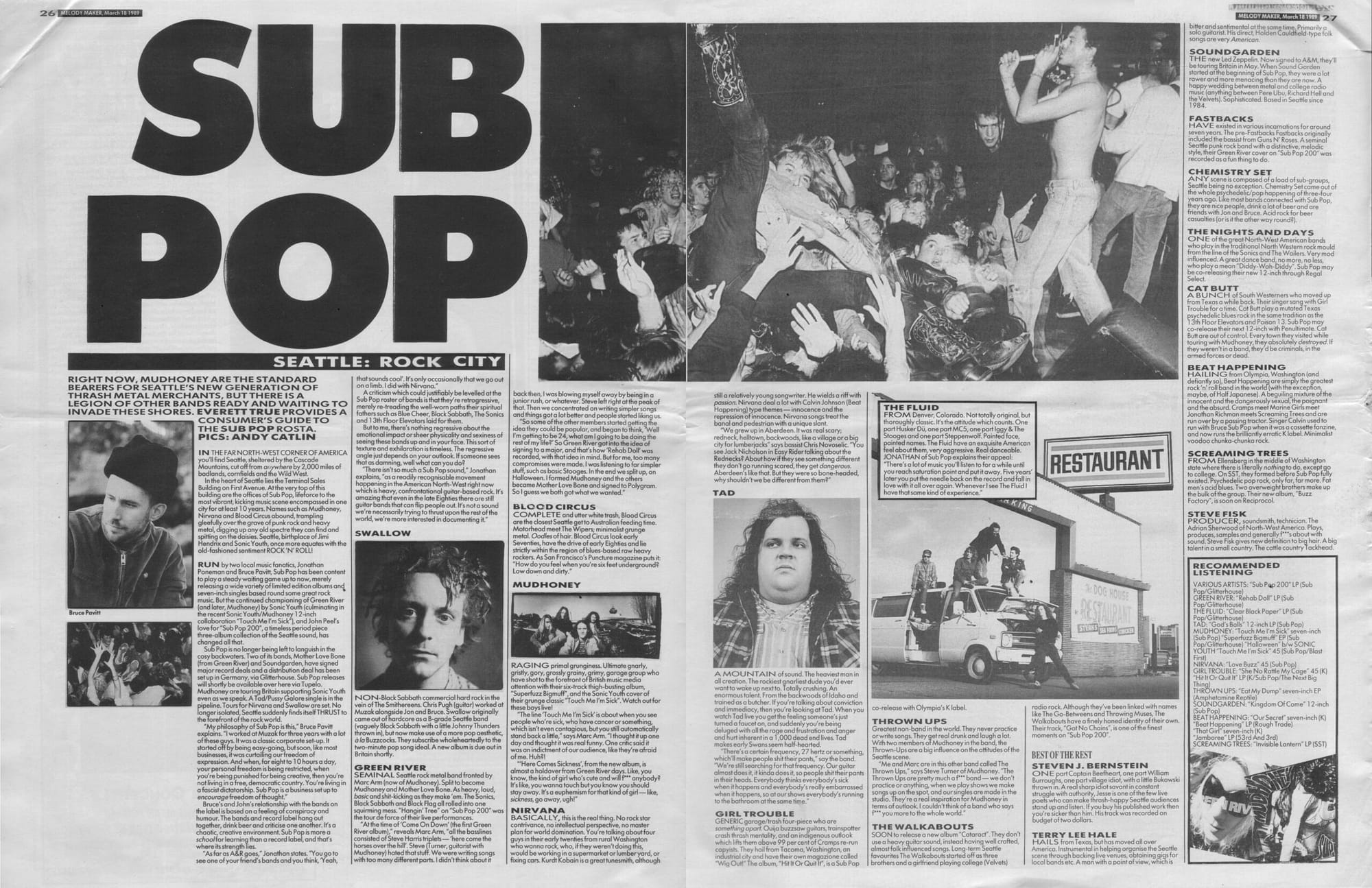
In your book, you write that today claiming to be a fan of grunge is somewhat like claiming to be a fan of the gavotte. Why has the term “grunge” lost relevance over time, and which factors have so far prevented a resurgence of the genre compared to other musical phenomena of the past?
I should say first that, at the time of writing the book, I was probably mainly enjoying the alliteration: clearly the comparison between grunge (which I argue was and is a musical genre) and the gavotte (an eighteenth-century courtly dance) is an ill-aligned one. That said, my broader point is that you can’t really say you are ‘into’ grunge as a musical genre in the same way you might for metal or grime or EDM or something. It feels too fixed to a particular era and place: its fashions, its politics, its buzzwords and so on. And, since nothing dates so badly as popular culture, this fixedness (and our ever-growing distance from its coordinates) also harbours potential embarrassment – much like if someone turned up to your party in their gavotte dancing clothes. To cut a long story on relevance short, I would say that grunge appeared organically, was massively commercially hyped in a very short space of time, and exploded, leaving fragments everywhere that are now difficult to discern. As is typical with huge and sudden trends like this, it
certainly had (and has) its detractors, some of whom take the extreme position that it never actually existed authentically at all. It’s this view, I think, that works as a primary blocker on any potential resurgence. No-one wants to mimic a sell-out.
How do you think Sub Pop’s commercial success has redefined the boundaries between indie and major labels?
Undoubtedly Sub Pop were very good at what they did, and, loser façade to one side, were ultimately very successful at it. We could echo many other commentators in calling the label a ‘pioneer’ in this sense. But I think it is also important to see the rise of Sub Pop as part of a bigger trend, probably a cyclical one that had arisen in the 1960s and now, twenty years later, surged again. On the one hand you had a proliferation of small, regional independent labels exploring how they could expand while somehow retaining their exclusive image, and particularly troubled by key headaches like advertising, distribution, and general cashflow; on the other, you had major labels exploring how they could avoid the stigma of big capital and connect directly and ‘authentically’ with potentially large and untapped fan bases. It makes sense to me that these explorations went hand in hand, as, in fact, the development history of Sub Pop shows. By as early as mid-1981, at least one major label was taking an interest in Bruce Pavitt’s regional ‘subterranean’ compilation tapes.
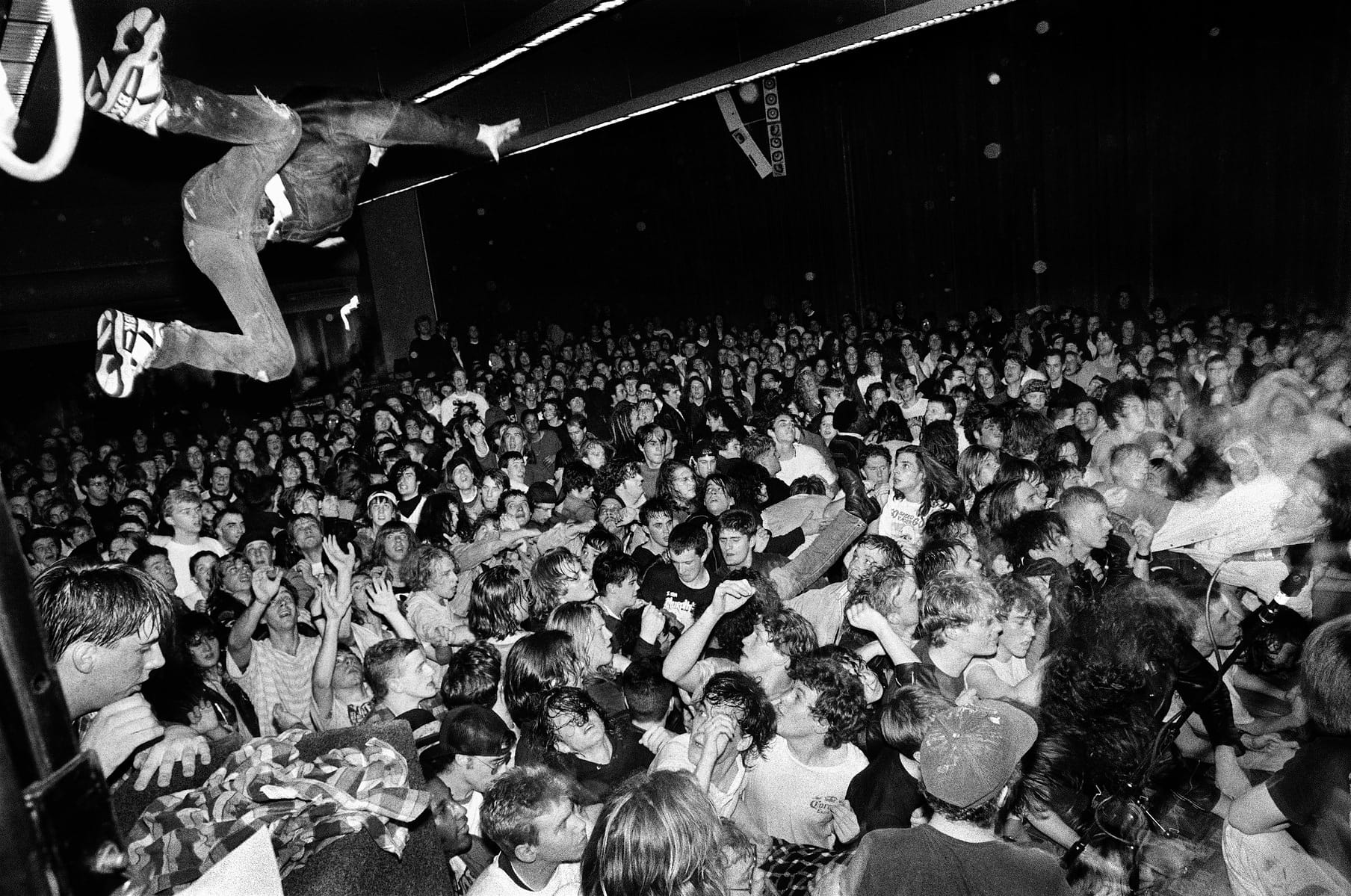
How do you view today the cultural legacy of Sub Pop’s promotional strategy: is it more an example of commercial genius or of cultural manipulation?
I am sure it is both: the story of Sub Pop demonstrates directly how these things can be – must be? – intertwined. In the book I cite an essay by Art Chantry, one of several graphic designers employed consistently by Sub Pop and numerous other indie labels in the late 1980s and early 1990s (in Sub Pop’s case for TAD, Reverend Horton Heat, Love Battery, and so on). In terms of his work, Chantry describes himself as a ‘virtual cultural propagandist of the lowest order’, a ‘mindfucker’ who ‘manipulate[s] the viewer into thinking the way that another interest – the client – wants to see’. To me this is the basic position statement that underpins Sub Pop’s early commerce, specifically in an engagingly humorous and self-aware manner that is also a key part of its rhetorical project.
Cobain spoke of “being the shadow of something that has already existed.” In what ways has this acknowledgment of the past shaped the musical identity of the grunge scene?
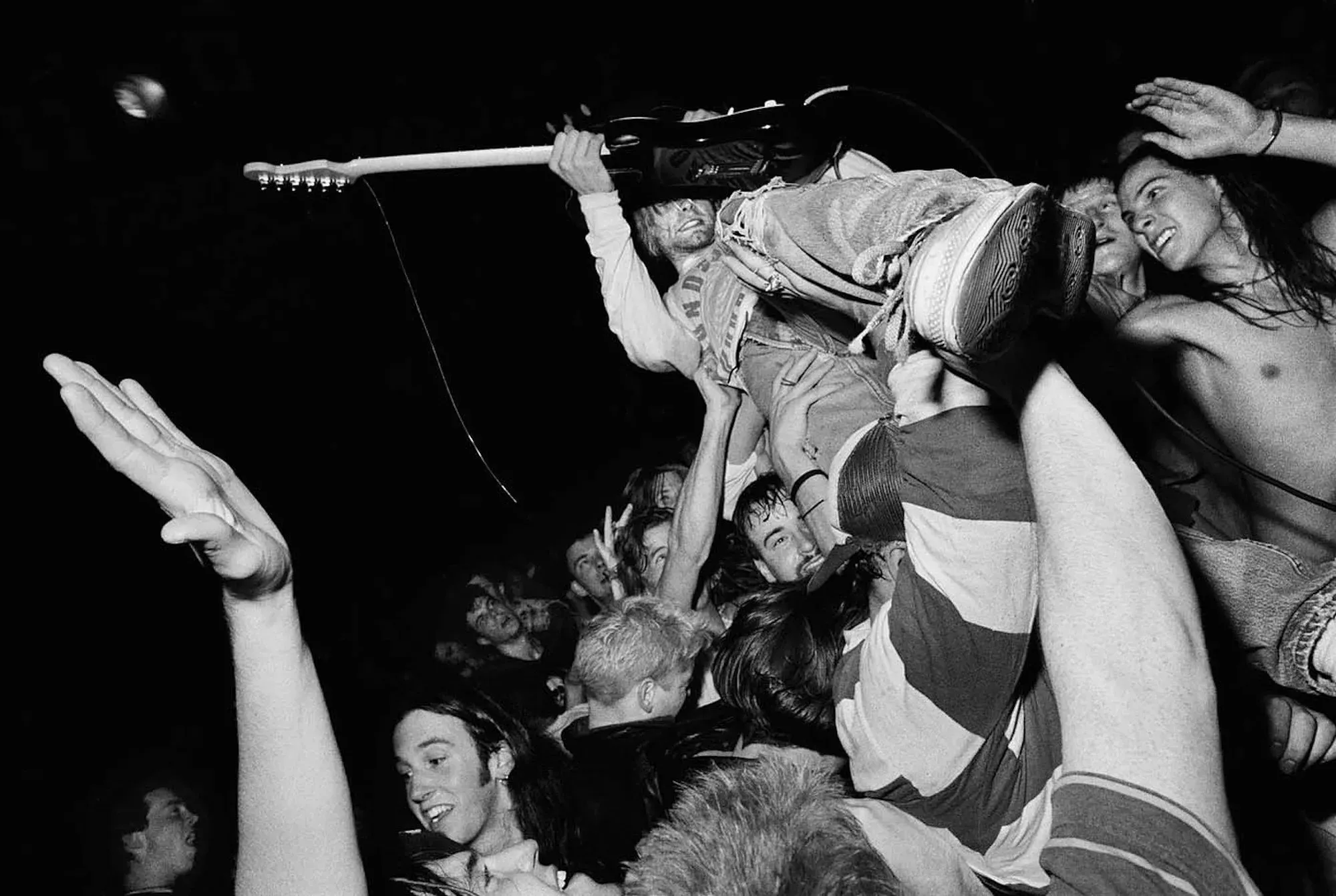
Kurt Cobain seems to have been haunted his whole life by the past, especially its music. In an early interview he laments that he will almost certainly never write an original song, and later there are quite a few examples of him deriding his riffs as mere clichés from the treasury of classic rock. My favourite example is a KAOS Radio broadcast from September 1990, in which he played (I think for the one and only time on record), a new tune called ‘Opinion’ and then, as the last chord rings out, says immediately ‘Don’t you think that song sounds like [the Beatles’] Taxman?’. The thing is, it really doesn’t – the arching ‘mm-hmms’ of the chorus resemble similar shapes in the chorus of Taxman, but there is certainly nothing so obvious as the bassline allusion of the Jam’s Start (as the host Calvin Johnson, in fact, points out). So it seems less a neutral acknowledgement of a soundalike, or an homage that everyone can hear, and more of Cobain’s feeling of the heavy past inevitably pressing down, revealing what a loser he is in his copycat songs, and by extension, what losers his fans are for believing in him. What’s very interesting is that you see this same anxiety all over the early grunge scenes: in Mudhoney’s chaotic revival of the Stooges and Soundgarden’s imitation of certain iconic hard rock (‘We’re Black Sabbath, thank you and good night’), as well as obviously retro lo-fi bands like Beat Happening. It is probably only in the total flops – the surreal ‘grungedelic’ Cat Butt, the ‘primal rock therapy’ of Blood Circus – that Sub Pop could lay any claim to originality. I suppose as the genre developed and the grip of fame took hold, we started to grant grunge more ‘novelty’ and ‘authenticity’, though these themselves are notoriously slippery terms that can imply all kinds of qualities. But the core loser identity, the existence as a pathetic shadow of something that had already been, was always waiting there in the wings. ‘It’s a rip-off’, says Cobain in the same KAOS broadcast, apparently of one his most famous and best-loved Nevermind songs, Lithium. Of what exactly, he doesn’t say – but to ask that question is to miss the point.
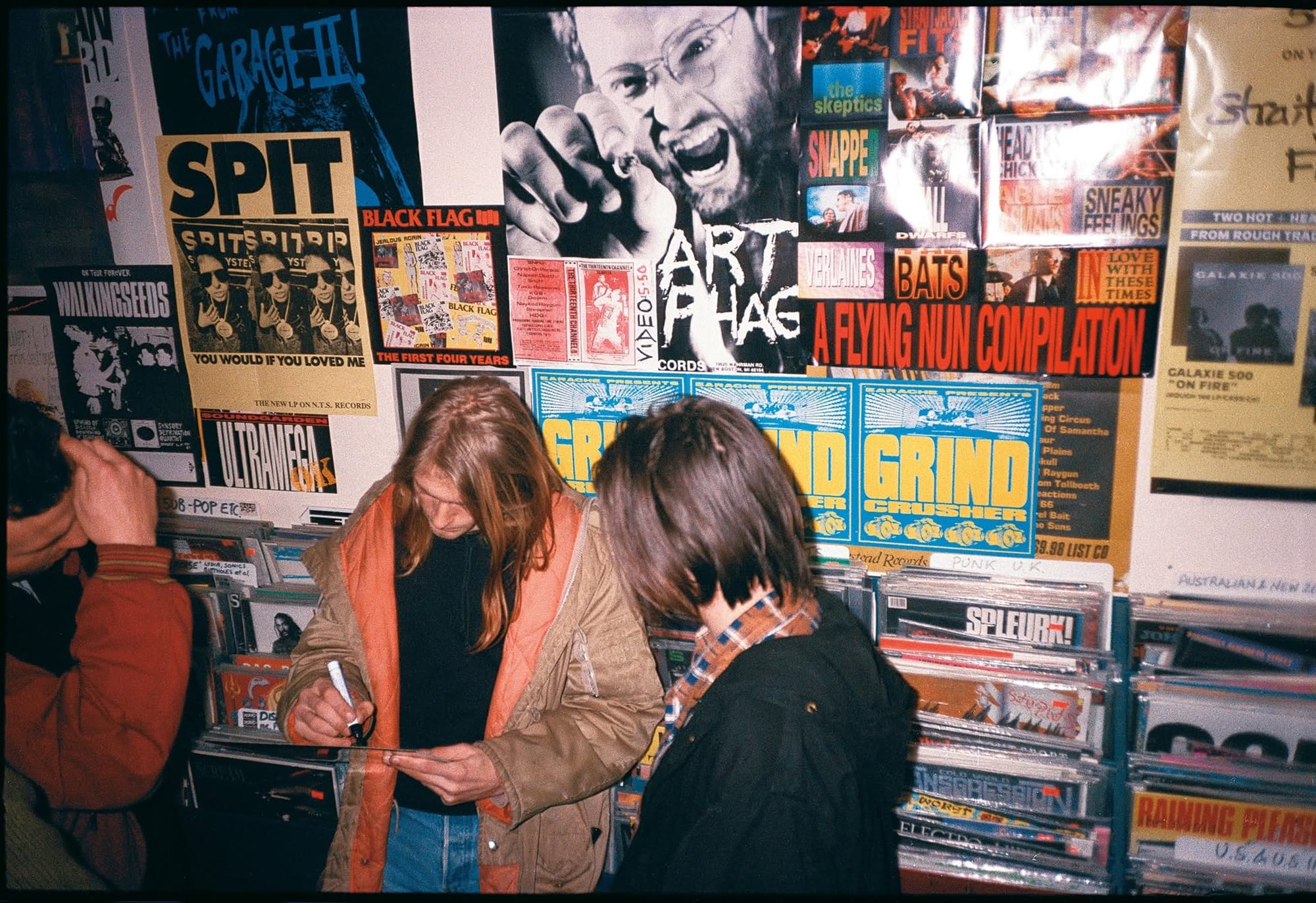
How did the fanzine Subterranean Pop advocate a “fight for American culture” against the major corporations? Was it merely promotional rhetoric, or was there a real sense of urgency?
In the very earliest issues of Subterranean Pop, I see no particular reason to doubt the force of righteous indignation that Bruce Pavitt directs at those formerly independent artists who, in his view, had sold out to major corporations. ‘Drop dead Patti [Smith]’ he says in his ‘New Pop Manifesto’ of issue #1 (May 1980), apparently because she had now lost her sense of ‘strength and adventurousness’. At the same time, though, the admission that some artists had managed to retain these qualities since signing to major labels is itself an acknowledgement: that the barriers would be forgotten in practice, becoming the rhetorical aspect only of a commercial project that thrived on statements of opposition and the ‘fight for culture’ in a number of different directions at once – not only towards the major corporations, but towards the perceived British dominance of the independent music market in the US, a presence utterly out of proportion with the geographical size of this ‘tiny rock in the ocean’ (July 1983).
How and why did the term “pop” become central in the Sub Pop fanzine compared to the term “punk”?
First off, it is probably important to point out Bruce Pavitt’s devotion to hardcore, and in particular Black Flag, which comes through strongly in his first fanzine attempts of the earliest 1980s. Equally clear, though, is that ‘punk’ by then seemed dated and threadbare enough to serve as a scapegoat term, the contemptuous label for congealed urban scenes that had lost sight of their DIY principles, if they had ever had any in the first place. ‘Pop’, on the other hand, ironically enough, promised several advantages: it sounded like something with broad appeal, perhaps even across all the local US scenes on which Pavitt reported and wished to unite against another British invasion; it allowed a reconnection with the explosion of popular styles of the 1960s, often echoed by all this local music; it allowed for wild commercial appeal; and it afforded all kinds of dated rhetoric at the base of the fanzine’s humour (‘pop raves’ played by ‘teen-age combos’, and so on). It also created a neat and productive dissonance for the title of the fanzine – originally Subterranean Pop before it got abridged to the more famous short version – something, that is, that was both ‘underground’ and yet for the masses. This was the core attitude from which the record label grew, too, from the mid-1980s onwards.
Why does Gina Arnold speak of social conservatism and sexism in the American indie scene of the late 1980s?
I suppose because she lived it. From the perspective of forty years later, we tend to look back on US ‘alternative’ rock as offering just that: an alternative to the toxic attitudes and identities of the hard rock in which it was grounded. There are, of course, plenty of statements from Cobain, Cornell and others to support this claim, not least Cobain’s consistent sniping at Guns N’ Roses in interviews across the early 1990s. Arnold’s writings, however, offer a useful corrective, a reminder that ‘alternative’ rock also smuggled some pretty nasty stuff in under the liberal surface on which we now tend to fixate – some of it taken directly from earlier rock culture, some of it boiling over anew. Men who wouldn’t work with women, for example, or relegated them to lesser band roles, or treated them as objects, or did violence to them through song and through critical comment. And this isn’t just a retrospective view from a more equality-aware age, by the way. It was often raised at the time, albeit in a conflicted way: see Cobain’s worries over Sub Pop’s continued advocacy of Dwarves, even as he sought to work (following in the footsteps of TAD) with the no less outrageously outspoken and controversial ‘no rules means no rules’ producer Steve Albini.
What characteristics of Nirvana’s material influenced other Sub Pop bands like Mudhoney and Tad?
Actually I wonder if we should think about the influence as going the other way, or at least as less unidirectional than is often supposed. If you look at the early Sub Pop, it was Mudhoney and TAD that served as the obvious flagships and centres of attention and advertising, for a brief moment anyway. Perhaps the chronology doesn’t quite work, but even so (if you can leave the Melvins to one side for a moment) it’s hard not to hear early Nirvana in the context of all the captivity and psychosis songs of TAD’s God’s Balls (March 1989). Boiler Room and Floyd the Barber and Helot and Paper Cuts overlap in lots of obvious ways, musically and lyrically. You could say the same about grunge’s rapid assimilation of pop elements, eventually dominating over its roots in metal. TAD’s second full LP, 8-Way Santa (the one with the notorious banned cover), appeared in February 1991, and, importantly, was also produced by Butch Vig. The chorused guitars of Jinx, the first single, are almost unimaginable on a record like God’s Balls, as is the similar jangle pop of 3-D Witch Hunt and Plague Years. But they make obvious sense in terms of Cobain’s post-Bleach songs. Honestly I think TAD just weren’t as at home in this developing style, and even Vig couldn’t help them much. Jinx has a nice underlying hook but is ultimately a far clunkier thing musically than almost any of the slick tunes on Nevermind.
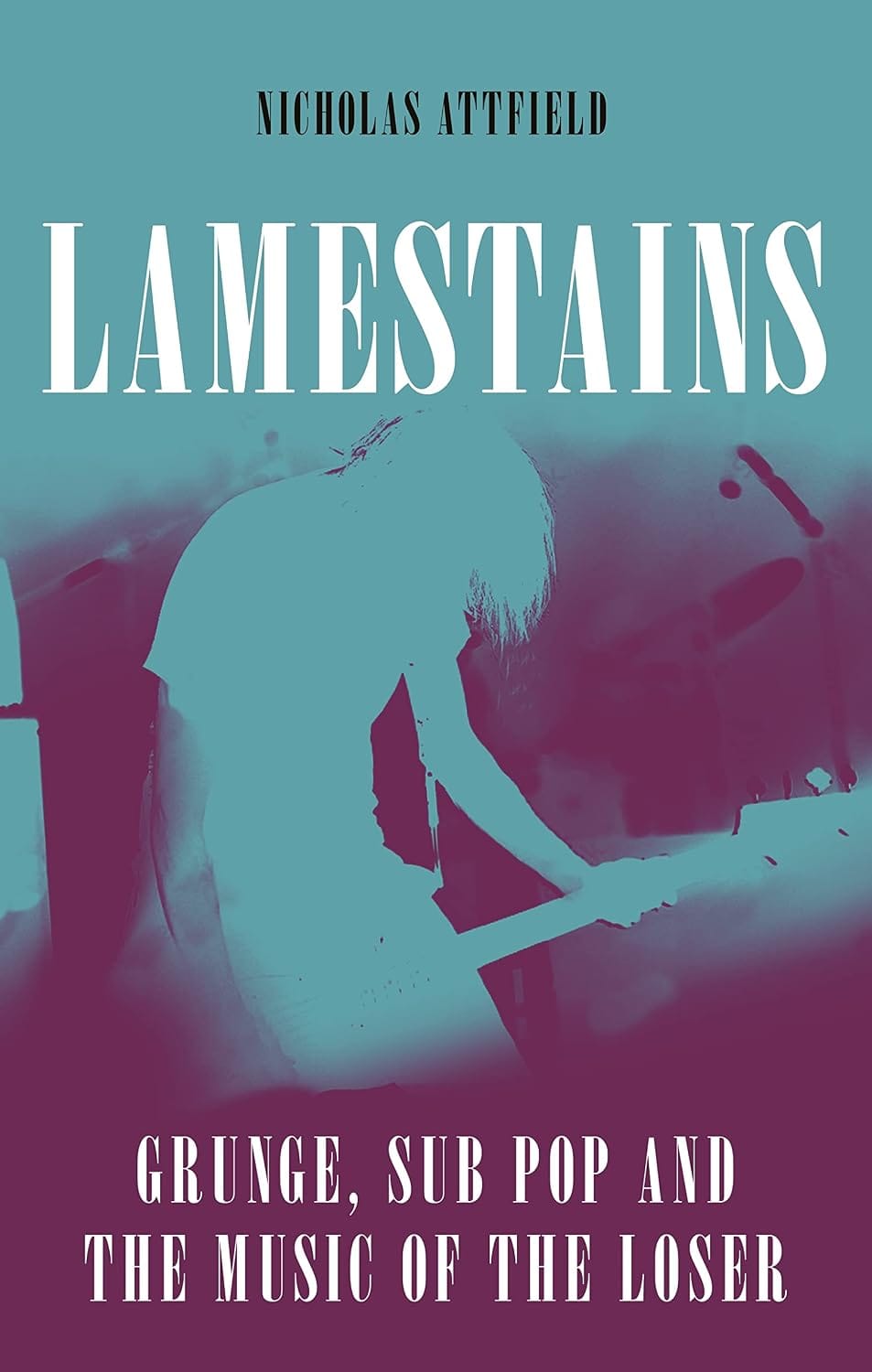
Lamestains: Grunge, Sub Pop and the Music of the Loser
A surprising history of Seattle’s Sub Pop Records, pioneer of grunge . . . and champion of losers.