Zulawski’s Possession is still a boundary-pushing film

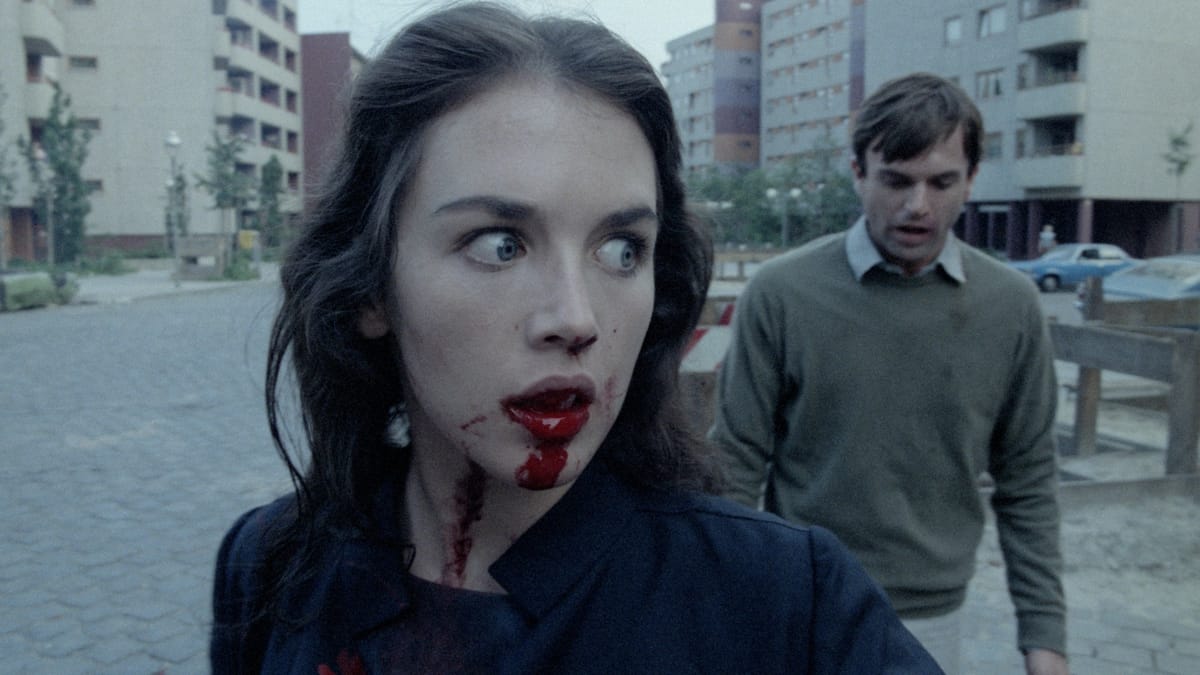
Few films still manage, after nearly half a century, to impress with the same kind of bold and visionary stylistic hysteria as Andrzej Żuławski’s Possession. Set against the backdrop of a desolate Berlin, still divided by the Wall, the story is a dark gem of European cinema, driven by excess and an extreme intensification of form. It is a disturbing and ambitious work, seeking to encompass within itself all the most pressing questions of existence. A film difficult to categorize, with its unusual structure blending horror fairy tale, grotesque, and metaphysical drama, inhabited by secret agents, zen-like lovers, unfaithful wives drawn to the allure of Evil, green-eyed doppelgängers, and an enigmatic apocalyptic ending. To explore the film in greater depth, now reaching its 45th anniversary, we speak with Henri de Corinth, film critic and author of a monograph on the director (Andrzej Żuławski, Abject Cinema, 2024).
Much European cinema of the early 1980s, as in this case, engaged with the aesthetics of crisis and post-ideological disillusionment
The aesthetics of crisis is perhaps the most accurate expression, given that for the West, cinematic images of the Eastern Bloc and the USSR conveyed a sinister aura: concrete buildings, a limited color palette, and so on. Something undesirable. At the time, Germany and the city of Berlin were at the center of it all. Late Cold War Berlin is, in every respect, a character in Possession, and it imposes itself on the viewer in the same way as in other films of the period, such as Die Berührte (1981) or Christiane F. (1981). The film in question comes at a difficult moment in Żuławski’s life: he had left the Eastern Bloc for the second time due to censorship issues with the Polish government, and, naturally, the film is in part a dramatization of his separation from the actress Małgorzata Braunek, with whom he had a young child at the time. However, the first draft of the screenplay suggests that the film was originally set in New York, and Żuławski himself once hinted that it was a story that could essentially take place anywhere. For this reason, setting the film in a then-divided Berlin—literally split by the Wall—reinforces the idea of self-exile or geographical and emotional separation, among other things.
The film is also known for its reckless use of the camera, which is particularly disorienting and restless
I sometimes like to describe certain films as a director’s “id” staged on screen. I have always thought that Żuławski’s manic use of the camera was, whether intentionally or not, a device that allows the viewer, to use Vivian Sobchack’s term, to enter in the first person into the subjectivity of the protagonist, and this can be found throughout the director’s filmography. On a more practical level, however, the director’s studies in Paris proceeded at a faster pace than what he would have experienced at the main film school in his home country, in Łódź. The French idea of “moving fast” undoubtedly seeped into his way of staging and photographing images.
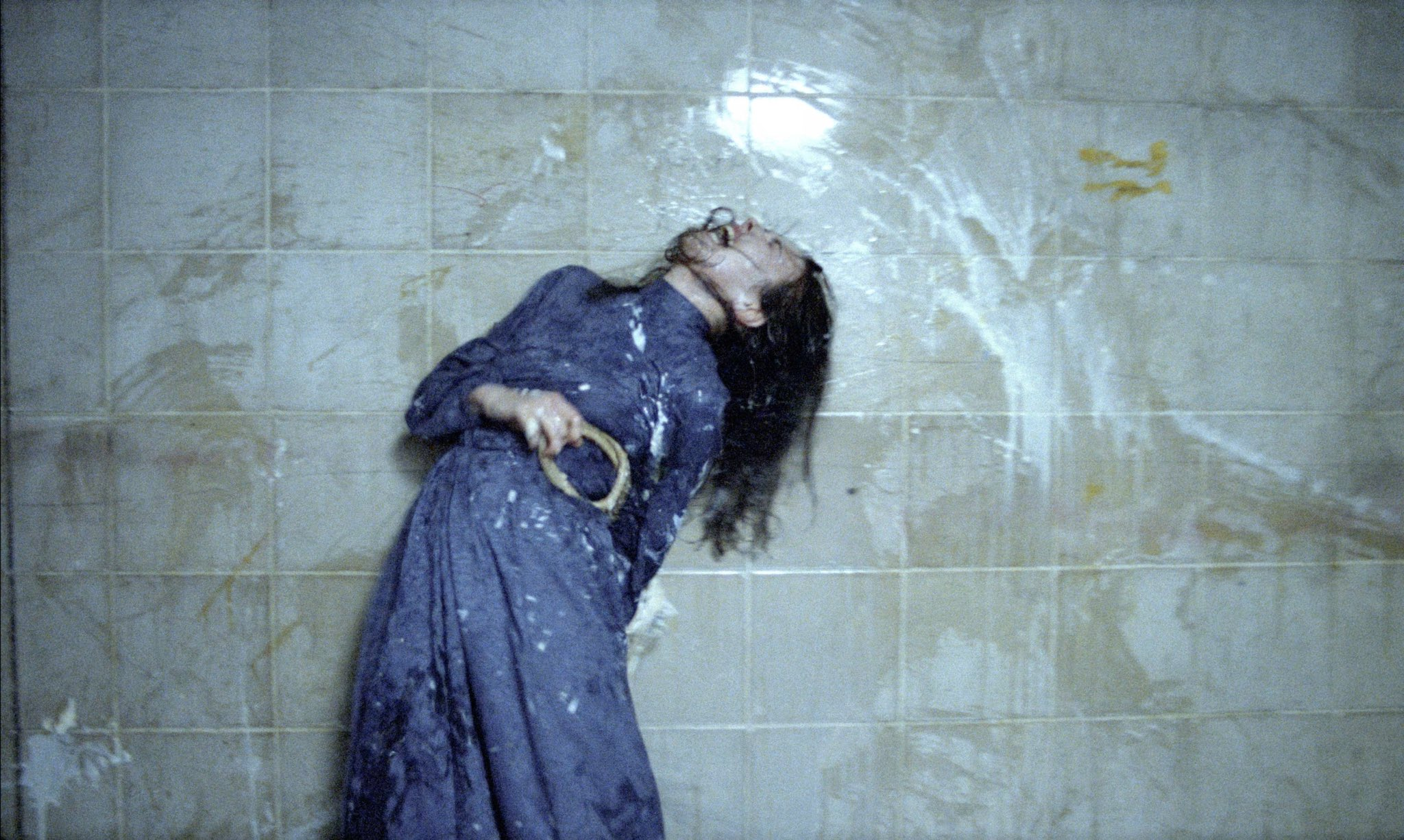
The other memorable component is undoubtedly Isabelle Adjani’s performance, which has often been described as “hysterical”
Unfortunately, much contemporary criticism adopts a reductive, “Reader’s Digest” understanding of theories and ideas formulated by authors such as Laura Mulvey, Julia Kristeva, Linda Williams, Carol Clover, and others (Mulvey herself has stated that much contemporary feminist criticism is based on a misunderstanding of what she meant by the “male gaze”). When this intersects with social media, it is predictable that hyperbole and a distorted use of language occur. “Isteria” and “mania” (terms that are in any case archaic and codified by Freud), so often used to describe what happens to Anna, have more to do, I believe, with what Kristeva called the non-verbal semiotic overflowing into the verbal symbolic. Much of Adjani’s performance in the film is indeed non-verbal (screaming and convulsions in a U-Bahn station, moaning and howling in a church, and so on), while she also struggles to articulate herself whenever Mark wants them to “talk calmly,” often resorting to religious analogies.
The film oscillates, at times in a disorienting way, between horror, psychological drama, and allegory. How do you interpret this genre ambiguity?
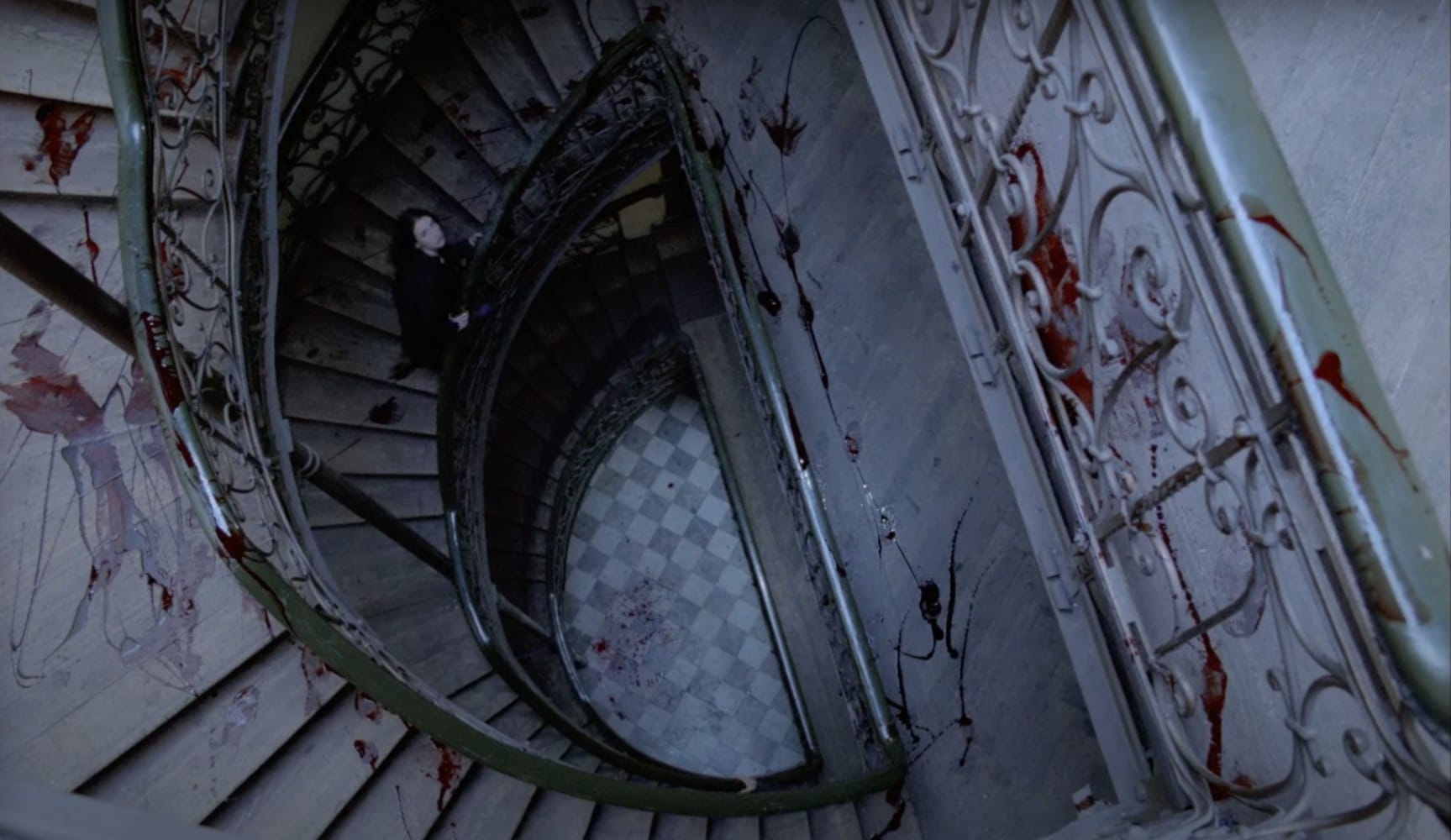
Possession is a bitter story about Żuławski’s separation from his wife and their child. At the same time, however, the screenplay was partly written on commission, when Żuławski was developing English-language projects for Dino De Laurentiis (which is also why it is the only one of his films made in English). It is therefore plausible that genre conventions were taken into account. This aspect is more evident in La note bleue (1991) and in his earlier films made in Poland. Żuławski often drew from Romanticism, which in Poland had specific characteristics compared to other parts of Europe. Texts that many Slavic traditions would consider Romantic prose would be classified in the West as surrealism, magical realism, or even Gothic literature: ghosts and doppelgängers could coexist with melodrama and comedy, and I believe this is where many of the “horror” and fantastical elements in Possession originate. More broadly, I see the film as an absurd parable about the Cold War: I have previously written about how the characters’ doppelgängers could be read as a kind of reflection of the division between West and East Germany.
And what about the “creature” in the film? A psychological projection, a political metaphor, or something that resists any single interpretation?
The short answer is that it is irreducible. It is all of these things at once. One idea that is often proposed, and which I have always found interesting, is that the Creature, which ultimately “matures” into Mark’s double, represents the substitute desired by Anna, just as Helen could be understood as the substitute desired by Mark. Each spouse has replaced the other with idealized figures that only resemble them, recalling Jacques Lacan’s famous dictum that we are never truly sexually attracted to our partner, but rather to an objectified version of them that can only exist in our imagination. At the same time, I have often thought of the Creature and Helen as analogues of elements of the East German state apparatus, in particular the Stasi of the GDR, infiltrating West Germany through institutions and the sphere of sexuality. The film takes the idea of “sleeper cells” quite literally: Mark’s double seems to infiltrate the government, while Anna’s is embedded in the educational system. In this sense, the Creature is the product of both psychological and political paranoia typical of the era.
Is the dissolution of the couple a reflection of the dissolution of individual identity?
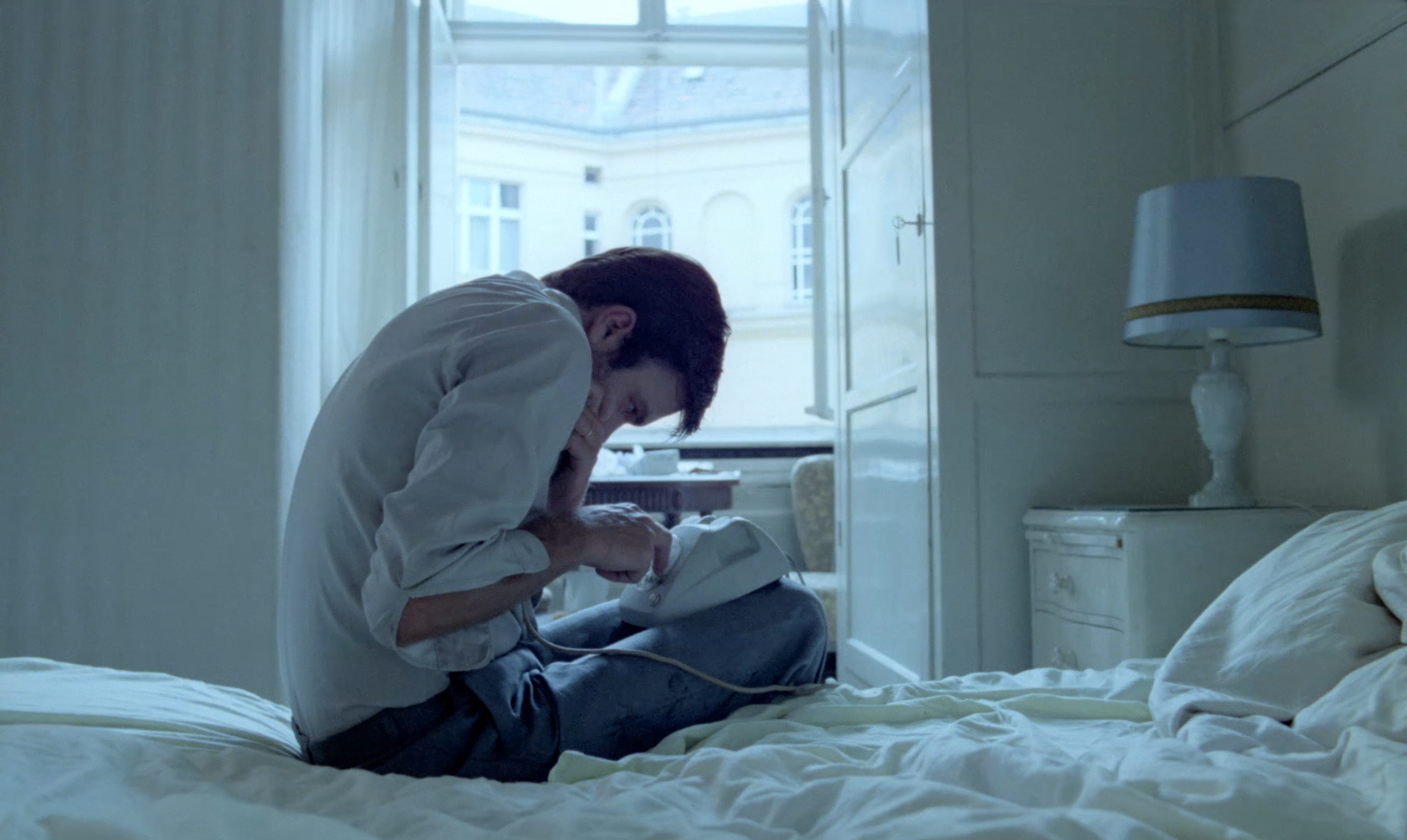
I think the appearance of the doppelgängers makes this explicit. The characters are confronted with, and “replaced” by, doubles of their spouses. Infidelity destabilizes the marriage, but when the people they betray each other with share the same physical identity as their partners, what remains is only a social identity tied to various institutions. If the film had not established that Mark is a spy or that Helen is a teacher, then what would remain would be only a representation of marriage as an abject experience. What else is there to define them, if not the Other?
In conclusion, why has Possession become a cult film? What is its most direct artistic legacy?
Possession is a “cult” film to the same extent as A Clockwork Orange (1971). Thirty years ago, Alex DeLarge was a common Halloween costume among teenagers and young adults who had seen or at least knew the film, even though they were born nearly a decade after its release. Possession today is something similar. Search the title as a hashtag on your phone and you’ll find a series of young women in blue outfits recreating the U-Bahn scene. If your protagonist becomes cosplay, the status is more that of a classic than a cult film. In any case, I would attribute its fame mainly to Adjani’s performance. Very rarely does a role push an actor into such a feral state, as in, for example, A Woman Under the Influence (1974) or even Bildnis einer Trinkerin (1979): in real life we are not allowed to behave like that, we find it unacceptable, but in cinema you can have everything. The film as a whole emerges from Żuławski’s response to events in his own life. The post-monocultural world, on the other hand, has produced an era of pastiche and imitation, of “homages” and empty nostalgia (Quentin Tarantino has built an entire career on this), and today we have filmmakers trying to “decode” films. In the past 15 years there have been several works that make superficial references to Possession: I could mention Diabolique (2013), La región salvaje (2016), Climax (2018), the Suspiria remake, and so on, but none of this stems from a lived, authentic experience. I can see similar performances in some later works by Shinya Tsukamoto and Philippe Grandrieux, although both come from traditions very different from that of Żuławski. Park Chan-wook and Yorgos Lanthimos have demonstrated an equally bombastic visual style, but even in this case the similarities seem rather superficial.